

Toubkal Trek | North Africa’s Highest Peak
Toubkal Trek represents one of the most rewarding mountain experiences in North Africa, offering adventurers the chance to summit the continent’s highest peak at 4,167 meters. Located in the stunning Atlas Mountains near Marrakech, this iconic trek combines breathtaking alpine scenery with authentic Berber culture and accessibility that makes it achievable for most fitness levels. Whether you’re an experienced mountaineer or a dedicated trekker seeking your next challenge, the Toubkal Trek delivers unforgettable memories and panoramic views that stretch across three countries on clear days.
This guide covers the multi-day summit trek itself — for where to base yourself in Imlil Village before and after the climb, see the Imlil Village base camp guide; for a shorter day trip with no summit attempt, see the Atlas Mountains day trip guide.
Planning your Toubkal Trek for 2026 requires careful consideration of timing, physical preparation, and logistical details. The mountain welcomes thousands of trekkers annually, making it crucial to understand seasonal conditions, required gear, and what to expect during this transformative journey. With proper preparation and realistic expectations, summiting Mount Toubkal becomes an achievable goal that transforms your Morocco travel experience into something truly extraordinary.
This comprehensive guide covers everything from training regimens and detailed itineraries to accommodation options and safety protocols, ensuring you’re fully prepared for North Africa’s most iconic mountain adventure. We’ll walk you through costs, seasonal considerations, and insider tips that experienced guides have perfected over decades of leading successful summits.
Complete Guide to Toubkal Trek: North Africa’s Ultimate Mountain Adventure
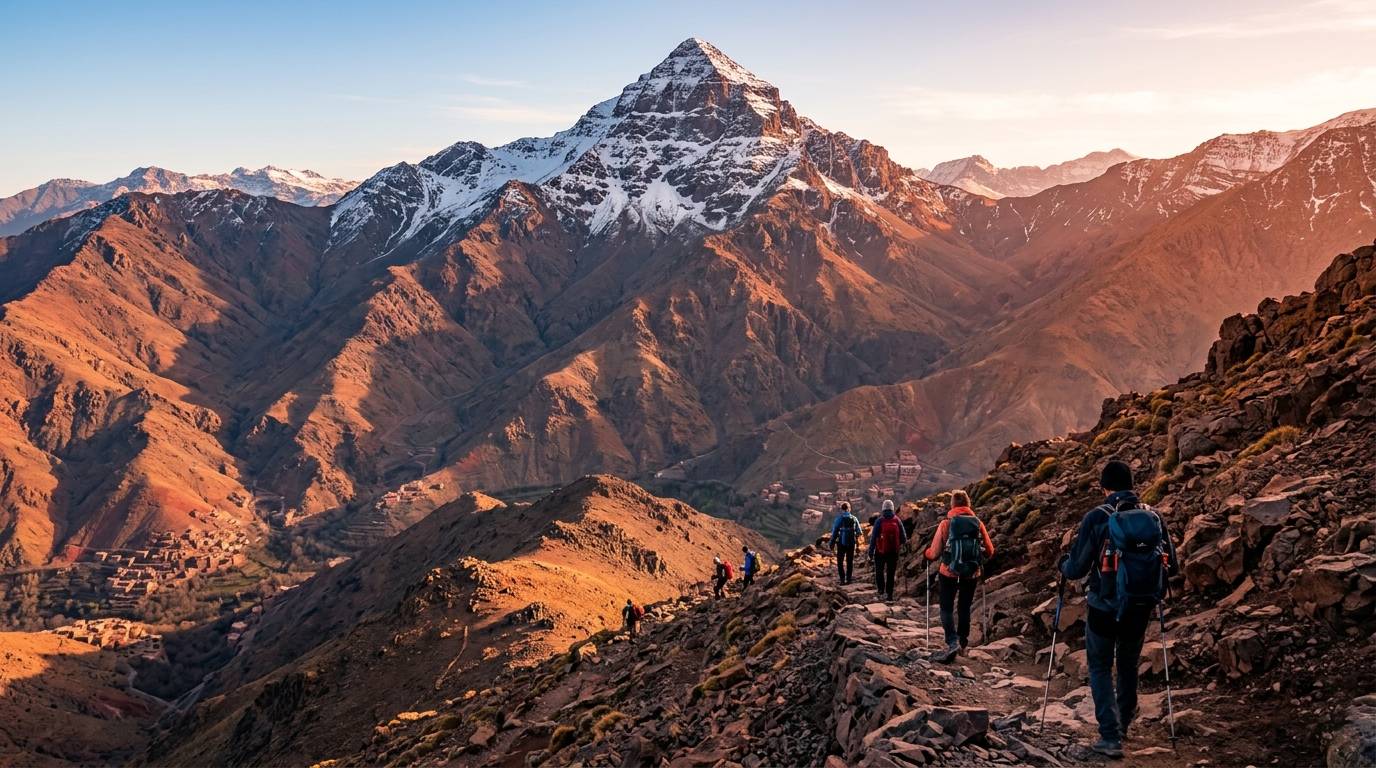
The Toubkal Trek stands as Morocco’s most famous mountain expedition, attracting approximately 2,000 climbers monthly during peak season. This non-technical summit means you won’t need specialized climbing equipment or advanced mountaineering skills, making it accessible to fit trekkers with moderate experience. The trek typically takes 2-3 days, with the standard route departing from Imlil village and passing through the Toubkal National Park. Most summiteers spend their first night at Refuge Toubkal (around 3,207 meters) before attempting the final ascent to the peak, where countless trekkers have celebrated their achievement with sunrise views that justify every step of the climb.
What makes the Toubkal Trek particularly special is its combination of physical challenge and cultural immersion. You’ll trek through traditional Berber villages where locals maintain centuries-old lifestyles, stay in authentic mountain refuges, and often employ local guides whose knowledge transforms the experience from mere hiking into cultural exchange. The mountain itself rises dramatically from valleys dotted with walnut and almond trees, creating a diverse ecosystem that shifts from Mediterranean vegetation to alpine terrain as you gain elevation. If you’re planning your Morocco journey for the summer months, our guide on Marrakech Summer Travel 2026: Complete Seasonal Guide provides excellent context for pre-trek relaxation and post-trek recovery in the nearby city.
- Non-technical summit at 4,167 meters elevation
- 2-3 day standard trek with 1-2 days of acclimatization possible
- Base village of Imlil located 65km south of Marrakech
- Approximately 2,000 monthly summits during peak season
- Costs range from 800-1,500 MAD ($75-145 EUR) for guided packages
Best Time to Trek Mount Toubkal in 2026
The optimal window for Toubkal Trek climbing runs from June through September, when snow clears from higher elevations and daytime temperatures remain moderate. However, each season offers distinct advantages: summer months (July through August) provide the most stable weather and longest daylight hours, though you’ll encounter more crowds. Spring (April-May) and autumn (September-October) deliver exceptional scenic conditions with fewer trekkers, wildflowers blooming in lower valleys, and clearer air for photography. Winter attempts are technically possible but require serious experience, specialized equipment, and knowledge of ice-climbing techniques, as snow and ice transform the terrain completely. For planning summer adventures, check Morocco Events in July 2026: Peak Summer Festivals & Major Concerts to coordinate your trek with cultural celebrations throughout the region.
Temperature variations on the mountain are dramatic—expect pleasant 15-20°C conditions at the base village of Imlil, dropping to freezing temperatures around -5°C or lower at the summit, especially at night. Wind chill factors become significant above 3,500 meters, making proper layering essential regardless of season. 2026’s seasonal patterns suggest that June and September offer the sweet spot of favorable conditions with manageable crowds. Most guides recommend avoiding August if possible due to overwhelming numbers at refuge facilities, though this month does guarantee the most stable weather patterns for your Toubkal Trek summit attempt.
- June-September: Optimal climbing season with snow-free routes
- July-August: Warmest conditions but highest trekker volumes
- April-May, September-October: Excellent conditions with lower crowds
- Temperature range: 15-20°C at base to -5°C+ at summit
- Daily weather shifts require layered clothing strategy
Top-Rated Tours & Experiences
Essential Preparation and Training for Your Toubkal Trek
Successful Toubkal Trek completion begins with honest assessment of your current fitness level and realistic training timelines. While the trek doesn’t require technical climbing skills, it absolutely demands cardiovascular endurance and mental resilience for sustained uphill effort at high altitude. Most fitness professionals recommend 8-12 weeks of training before your attempt, focusing on hill walking with loaded backpacks (10-15kg), stair climbing, and sustained cardio sessions of 45-60 minutes. The greatest challenge isn’t the technical difficulty—it’s adapting to altitude while maintaining pace over long days with significant elevation gain (typically 1,000-1,200 meters daily).
Beyond physical preparation, your Toubkal Trek success depends on proper acclimatization strategy and mental preparation. Consider arriving in Marrakech 2-3 days before starting your trek to adjust to the region’s climate and begin the gradual altitude adjustment process. Spend your first day exploring lower elevations around Imlil (1,740 meters) with easy walking, allowing your body to begin oxygen adjustment. Hydration starts before you reach the mountain—drink consistently in the days leading to your trek, not just during it. Mental preparation matters equally; visualize difficult moments, develop mantras for challenging sections, and remember that thousands of ordinary people summit Toubkal annually, proving that with proper preparation, you can too.
- 8-12 weeks training timeline with weekly hill walking progression
- Cardiovascular workouts: 45-60 minutes sustained activity 3-4 weekly
- Backpack training: Carry 10-15kg on practice hikes
- Altitude acclimatization: Arrive 2-3 days early in Marrakech
- Mental preparation: Develop positive self-talk for difficult moments
Detailed Toubkal Trek Route and Day-by-Day Itinerary
The standard Toubkal Trek follows a well-established route beginning in Imlil village (1,740 meters), where most organized treks commence. Day one typically involves a 5-6 hour hike from Imlil through Berber settlements and alpine meadows to Refuge Toubkal (3,207 meters), gaining approximately 1,500 meters elevation. This first day establishes your pace and allows initial acclimatization while the terrain remains relatively gentle. You’ll pass through traditional villages where Berber families maintain agriculture on steep mountainsides, their expertise evident in centuries-old terracing systems. Stay overnight at the refuge to allow your body critical rest and adaptation time before the summit push.
Day two represents the pinnacle of your Toubkal Trek experience—the summit attempt. Most groups depart before dawn (typically 4-5 AM) to reach the peak as morning light arrives, giving you optimal visibility and time to descend safely before afternoon weather deteriorates. The route from the refuge to the summit covers approximately 4 kilometers but involves sustained steep climbing over rocky terrain, requiring 3-4 hours of focused effort. Altitude effects become pronounced here, necessitating slower pace and deliberate breathing. Upon reaching the 4,167-meter summit, you’ll witness panoramic views encompassing the entire High Atlas range, Anti-Atlas mountains, and on exceptional days, visibility extending toward the Sahara Desert itself. The descent takes 2-3 hours to return to the refuge, where celebration and rest await. Day three involves descending back to Imlil (5-6 hours), allowing you to feel your legs’ full fatigue while absorbing final mountain vistas. If you’re staying in Marrakech afterward, check our Morocco Events in August 2026: Peak Tourism & Summer Finale Festivals for summer events coordinating with your trek completion.
- Day 1: Imlil (1,740m) → Refuge Toubkal (3,207m) – 5-6 hours, +1,467m elevation
- Day 2: Pre-dawn summit push → Peak (4,167m) → Return to refuge – 6-7 hours total
- Day 3: Refuge
Related Articles
- Imlil Village Hiking | Toubkal Base Guide
- Atlas Mountains Day Trip | From Marrakech
- Morocco Hiking Guide | Best Trails 2026
- Marrakech Summer Travel 2026: Complete Seasonal Guide
Frequently Asked Questions
What is the difficulty level of the Toubkal Trek?
The Toubkal Trek is moderate to challenging, suitable for people with basic fitness levels. Most trekkers can complete it in 2-3 days with proper acclimatization and preparation.When is the best season for the Toubkal Trek in 2026?
June through September offers the best conditions with stable weather and clear skies. March to May and October to November are also viable but cooler and potentially snowy at higher elevations.How high is Mount Toubkal?
Mount Toubkal stands at 4,167 meters (13,671 feet), making it the highest peak in North Africa and a UNESCO World Heritage site.Do I need a guide for the Toubkal Trek?
While not mandatory, hiring a local guide is highly recommended for safety, navigation, cultural insights, and to support local communities. Most trekkers use guides.What should I pack for the Toubkal Trek?
Essential items include sturdy hiking boots, layered clothing, a warm jacket, sleeping bag, water bottle, sun protection, first aid kit, and high-energy snacks for this demanding mountain trek.
Every city, the Sahara, transport, costs, safety, and a full Darija phrasebook — free, straight to your inbox.
Find the Best Morocco Tours
Compare 500+ tours, day trips and experiences — free cancellation and instant confirmation.
Every city, the Sahara, transport, costs, safety, and a full Darija phrasebook — free, straight to your inbox.
Get the free guide →🌍 Wanna hear more from Morocco?
Weekly travel tips, hidden gems and new guides — straight to your inbox.
Free, no spam, unsubscribe anytime.