

Chefchaouen Morocco: The Complete Blue City Guide (2026)
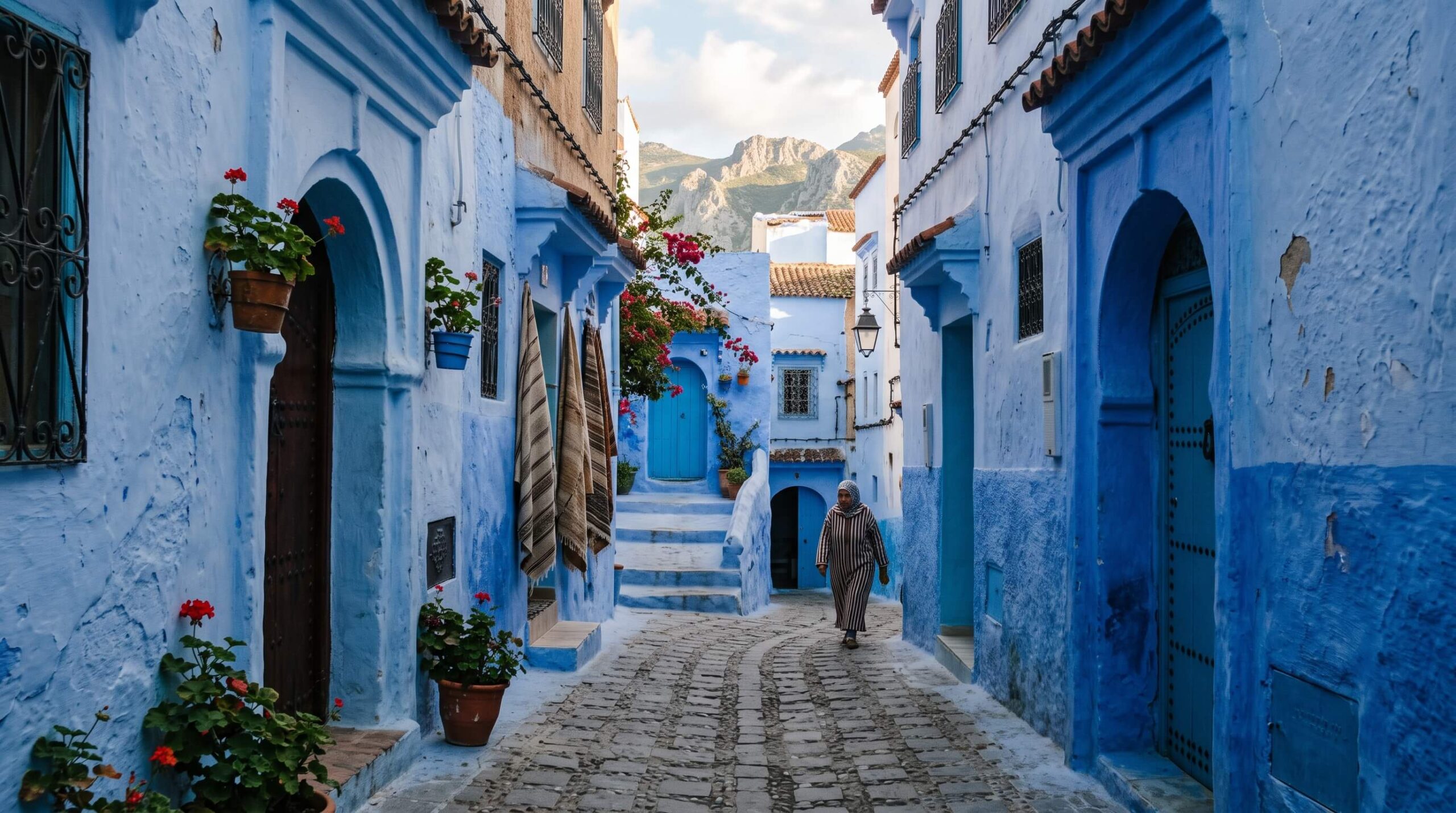
Chefchaouen — Morocco’s famous “Blue City” — sits in the Rif Mountains in the country’s north, its old medina washed almost entirely in shades of blue, from pale sky to deep indigo. It’s one of the most photographed places in Morocco, and one of the most asked-about: why is it blue, is it actually worth the trip, and what is there to do once you arrive beyond taking photos.
This guide answers all three directly, plus how to get there, where to stay, and the best half-day trip from town — the Akchour waterfalls.
⚡ Quick Answer
Is Chefchaouen Worth Visiting?
Yes — Chefchaouen is worth visiting for the blue medina alone, and most travelers spend 1–2 nights. It’s reached by road from Fes (2.5–3h), Tangier (2h), or Chefchaouen (5–6h from Marrakech, usually via Fes). The blue paint dates back to the 1930s Jewish refugee community and is repainted yearly. Top add-on: the Akchour waterfalls, a 45-minute drive with a moderate 2–3 hour hike.
| Detail | Info |
|---|---|
| Best time to visit | March–May, September–November |
| Recommended stay | 1–2 nights |
| From Fes | 2.5–3 hours by car/CTM bus |
| From Tangier | 2 hours by car/bus |
| Must-do add-on | Akchour waterfalls (half-day) |
Why Is Chefchaouen Blue?
The most common explanation is that Jewish refugees who settled in Chefchaouen in the 1930s, fleeing persecution in Europe, introduced the tradition of painting buildings blue — a color with deep significance in Judaism, said to represent the sky and remind residents of the divine. When the Jewish community largely left after 1948, the tradition stuck and locals kept it going, partly for the look, partly because the pigment is believed to repel mosquitoes.
A second, more practical theory holds that indigo dye was simply cheap and locally available, and blue-washing became a way to keep the medina looking clean and cool in the mountain heat. Most guides in town will tell you a version of both — the honest answer is that nobody has fully documented which came first, but the Jewish-refugee origin is the version most historians point to.
Today the blue isn’t just tradition, it’s maintained deliberately: shop owners and residents repaint their walls and doorframes every year, usually before spring, to keep the color fresh for the tourist season.
Best Things to Do in Chefchaouen
- Walk the medina at sunrise — the light is softest before 8am and the alleys are empty of both tourists and street vendors, the best window for photos.
- Plaza Uta el-Hammam — the main square, ringed by cafés, the Kasbah, and the Grand Mosque. The natural spot to start and end a day.
- The Kasbah and Ethnographic Museum — a small 15th-century fortress with a garden and a modest museum on Rif culture; worth 30–45 minutes.
- Spanish Mosque viewpoint — a 30–40 minute uphill walk from the medina to a hilltop mosque with the best panoramic view over the blue city, especially at sunset.
- Ras El Maa waterfall — a small waterfall right at the edge of the medina where locals wash wool and clothes; a 5-minute walk from the main square, easy to combine with a morning walk.
- Shop for local wool and weaving — Chefchaouen and the surrounding Rif villages are known for handwoven wool blankets and djellabas, generally cheaper and less mass-produced than in Marrakech or Fes.
- Day trip to Akchour waterfalls — see the dedicated section below; this is the single most popular half-day activity from town.
Most of the medina’s charm is in wandering without a fixed plan — it’s small enough (roughly 20–30 minutes to cross end to end) that getting lost for an hour or two is part of the experience, not a risk.
Akchour Waterfalls: The Best Day Trip from Chefchaouen
Akchour is a small village about 45 minutes by grand taxi or organized tour from Chefchaouen, set inside Talassemtane National Park. From the village, a well-marked trail follows the Farda River to two waterfall destinations:
- The small waterfall (Cascade d’Akchour) — roughly a 45-minute walk each way, easy, suitable for most fitness levels, ends at a pool where swimming is possible in warmer months.
- God’s Bridge (Pont de Dieu) and the big waterfall — a longer, steeper route (2.5–3 hours each way), rewarded by a natural stone arch and a taller waterfall further upriver. Sturdy shoes recommended.
Most day-trippers do the shorter route unless they’re comfortable with a full day of hiking. Grand taxis from Chefchaouen’s main taxi stand to Akchour cost roughly 15–20 MAD per person shared, or the trip can be booked as an organized half-day tour that includes transport and a guide — useful in peak season when the shared-taxi queue gets long.
Top-Rated Tours & Experiences
How to Get to Chefchaouen
Chefchaouen has no train station and no commercial airport of its own — the nearest airports are Tangier Ibn Battouta (about 2 hours away) and Fes-Saïss (about 3 hours away). Most travelers arrive by CTM/Supratours bus, grand taxi, or private transfer from Fes, Tangier, or Tetouan. For a full route-by-route breakdown, schedules, and prices from Marrakech, see our Marrakech to Chefchaouen travel guide.
Where to Stay in Chefchaouen
The medina itself is where you want to be — nearly every riad and guesthouse here is painted the same signature blue, and staying inside the walls means you can walk everywhere. Budget travelers will find hostels clustered near Plaza Uta el-Hammam; see our Morocco hostels guide for booking tips that apply here too. For a first Morocco trip that includes Chefchaouen as a stop, check our 7-day Morocco itinerary for how to fit it in without rushing.
Where to Eat: Local Food & Dining
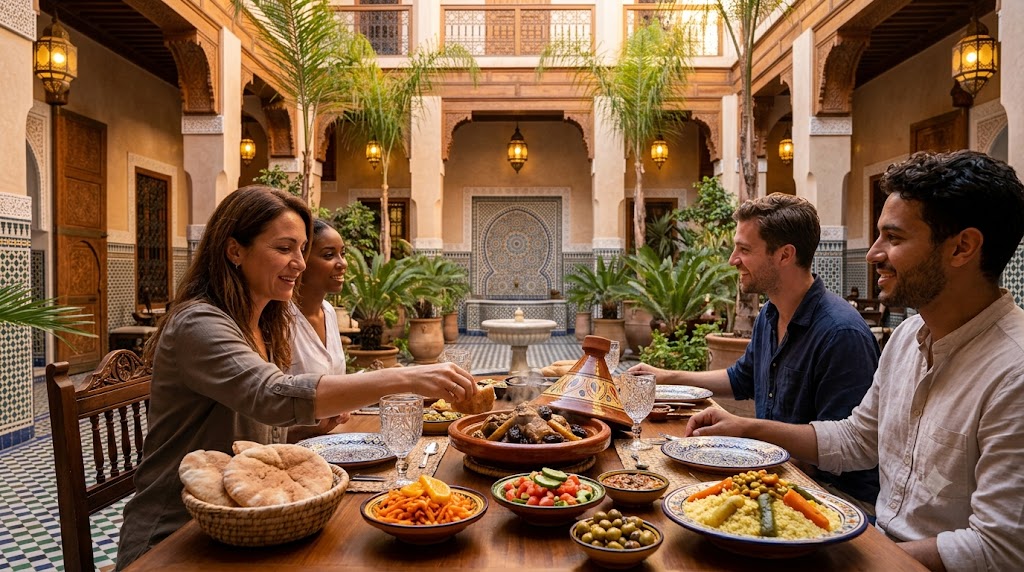
Chefchaouen’s food scene blends traditional Moroccan cooking with Mediterranean touches from its mountain setting. Tagines run 50-100 MAD (€5-10), fresh trout from mountain streams is a local specialty at 60-120 MAD (€6-11) grilled or in sauce, and Couscous Friday is worth timing your visit around (50-80 MAD). Mint tea and pastries at the cafes around Plaza Uta el-Hammam run 10-20 MAD a glass.
For a cheap, filling lunch, medina stalls sell msemen (layered pastry) and harira (tomato-lentil soup) for 10-25 MAD. Most restaurants cluster around Plaza Uta el-Hammam and the main tourist streets leading up from it — walk a block or two further out and prices drop without any real difference in quality. Tap water isn’t recommended; bottled water is cheap and most riads provide it. Cash is still the norm for the medina’s cafes, artisan stalls, and taxis — larger hotels and some restaurants take cards, but don’t count on it.
Every city, the Sahara, transport, costs, safety, and a full Darija phrasebook — free, straight to your inbox.
Get the free guide →Best Time to Visit Chefchaouen
Spring (March–May) and fall (September–November) are the best windows — mild temperatures for walking the hilly medina and hiking to Akchour, without the summer heat (which regularly hits 35°C+) or winter’s cold, wet streets that make the blue paint run and the cobblestones slippery. Ramadan timing shifts yearly and affects café/restaurant hours in the medina — check dates before booking if traveling then.
Find the Best Guided Tours & Experiences
Compare 500+ Morocco tours — desert camps, city tours, food walks & day trips. Free cancellation on most.
Every city, the Sahara, transport, costs, safety, and a full Darija phrasebook — free, straight to your inbox.
Get the free guide →🌍 Wanna hear more from Morocco?
Weekly travel tips, hidden gems and new guides — straight to your inbox.
Free, no spam, unsubscribe anytime.