

Rabat Morocco: The Complete Capital City Guide (2026)
Rabat is Morocco’s capital city — and one of its most overlooked. While Marrakech and Fes draw the crowds, Rabat offers a quieter, more orderly window into Morocco: a genuine working city rather than a tourist circuit, home to a UNESCO World Heritage-listed old town, one of the country’s most beautiful fortress-viewpoints, and the mausoleum of the modern nation’s founding king.
This guide covers what to do, whether it’s worth the trip, how to get there, and what makes Rabat different from Morocco’s more famous imperial cities.
⚡ Quick Answer
Is Rabat Worth Visiting?
Yes — Rabat is Morocco’s capital, with a UNESCO-listed old town, the Kasbah of the Udayas, and the Hassan Tower. It’s calmer and less touristy than Marrakech or Fes, making it a good 1-night add-on or a comfortable first stop after landing. It’s 55 minutes from Casablanca by train, making it an easy day trip if short on time.
| Detail | Info |
|---|---|
| Best time to visit | March–May, September–November |
| Recommended stay | 1 night, or a day trip from Casablanca |
| From Casablanca | 55 minutes by Al Boraq / ONCF train |
| From Fes | About 3.5 hours by train |
| Must-do | Kasbah of the Udayas, Hassan Tower, Chellah |
Rabat’s Old Town and the Kasbah of the Udayas
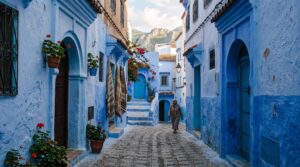
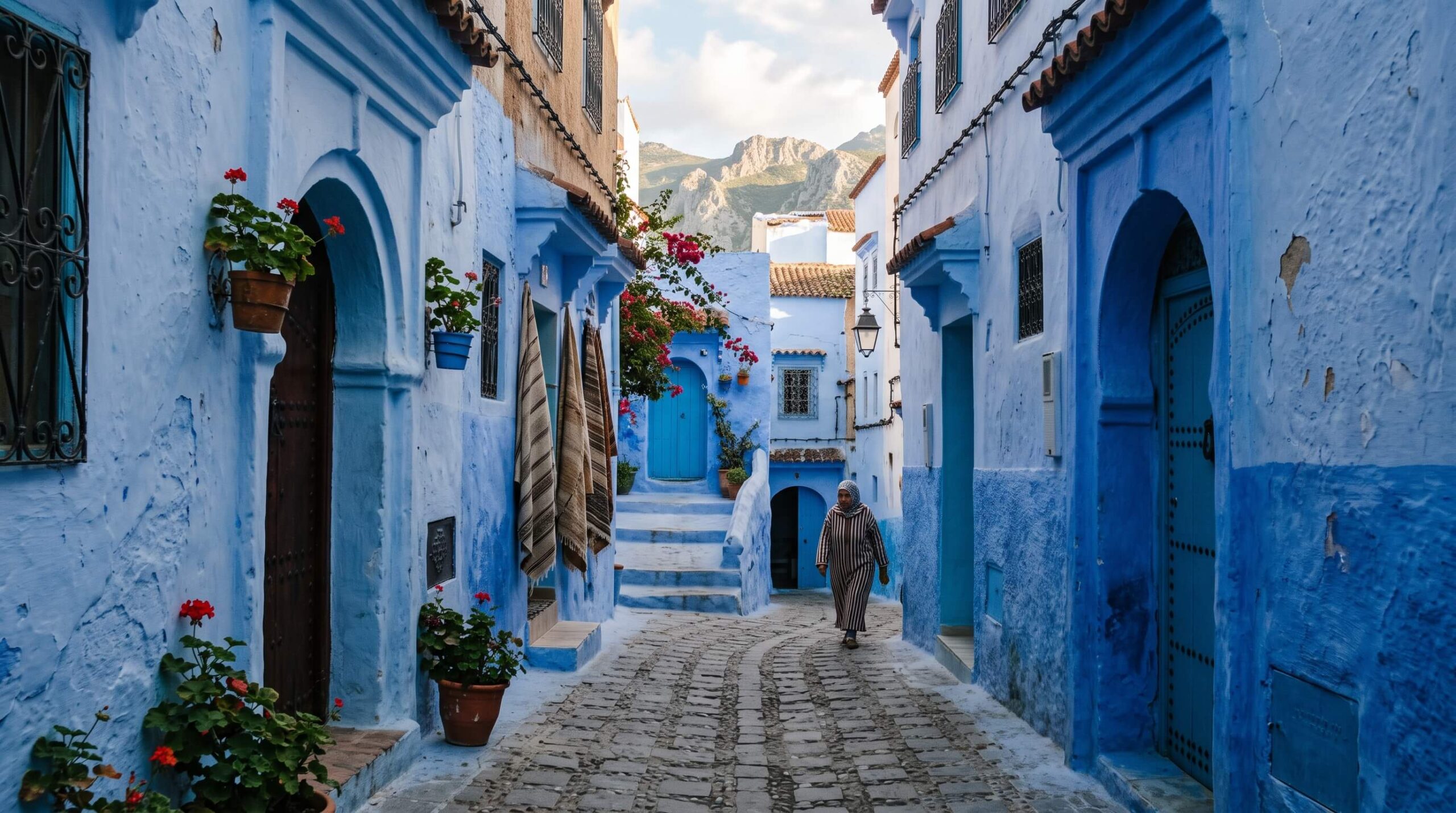
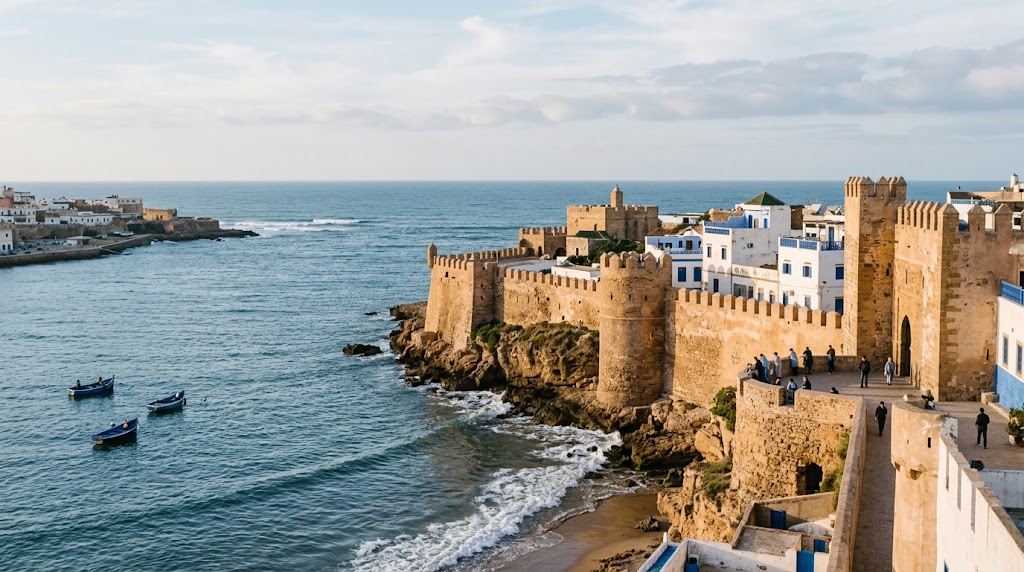
Rabat’s medina and the neighboring Kasbah of the Udayas form a UNESCO World Heritage Site inscribed in 2012, recognized as a coherent example of a modern Moroccan capital blending historic Islamic and French colonial-era urban planning. The Kasbah itself is a fortified 12th-century citadel overlooking the Bou Regreg river mouth and the Atlantic — a maze of blue-and-white painted alleyways, much calmer and less commercial than Chefchaouen’s, ending at a platform terrace with sweeping ocean views.
Unlike Fes or Marrakech, Rabat’s medina is compact, orderly, and easy to walk without a guide — a reflection of the city’s role as a functioning administrative capital rather than a preserved-in-amber tourist attraction.
Best Things to Do in Rabat
- Kasbah of the Udayas — a fortified blue-and-white citadel with an Andalusian garden, a small museum, and a terrace café overlooking where the Bou Regreg river meets the Atlantic.
- Hassan Tower and the Mausoleum of Mohammed V — the unfinished 12th-century minaret of what was meant to be the world’s largest mosque, standing beside the ornate mausoleum of Morocco’s modern founding king, guarded by mounted royal cavalry in ceremonial dress.
- Chellah — a walled necropolis just outside the city center, built over Roman ruins and later used as a royal Merinid burial ground; now partially overgrown and home to nesting storks, one of the most atmospheric ruins in Morocco.
- Rabat Medina souks — smaller and far less pressured than Marrakech’s or Fes’s, known for genuinely local shopping (household goods, textiles) alongside the usual tourist crafts.
- Mohammed VI Museum of Modern and Contemporary Art — Morocco’s first major museum dedicated to modern Moroccan and African art, a rare cultural stop for a country whose sights skew historic.
- Rabat’s Corniche and Salé across the river — a coastal walk along the Atlantic, with the sister city of Salé (reachable by rowboat ferry or the tram) offering its own quieter old town.
How to Get to Rabat
Rabat’s airport (Rabat-Salé) has limited international routes, so most travelers connect via Casablanca’s Mohammed V Airport and take the train onward. The Al Boraq high-speed rail line connects Casablanca to Rabat in under an hour, making it one of the easiest day trips in the country. From Fes, the ONCF train takes roughly 3.5 hours. For train schedules and booking details, see our ONCF train routes and prices guide.
Top-Rated Tours & Experiences
Where to Stay in Rabat
Staying near the Kasbah of the Udayas or the medina puts you within walking distance of the main sights and the Corniche. Business travelers and those prioritizing modern amenities often base themselves in the Agdal or Hay Riad districts instead, both well-connected by tram to the historic center.
Best Time to Visit Rabat
Spring (March–May) and fall (September–November) offer the mildest weather for walking the Kasbah and Chellah. Rabat’s Atlantic coastal position keeps summers noticeably cooler than inland Fes or Marrakech, so it’s also a reasonable stop even in July and August if your itinerary is otherwise heat-constrained.
Every city, the Sahara, transport, costs, safety, and a full Darija phrasebook — free, straight to your inbox.
Find the Best Guided Tours & Experiences
Compare 500+ Morocco tours — desert camps, city tours, food walks & day trips. Free cancellation on most.
Every city, the Sahara, transport, costs, safety, and a full Darija phrasebook — free, straight to your inbox.
Get the free guide →🌍 Wanna hear more from Morocco?
Weekly travel tips, hidden gems and new guides — straight to your inbox.
Free, no spam, unsubscribe anytime.