
ONCF First Class vs Second Class 2026: Is It Worth the Upgrade ?
⚡ Quick Answer
ONCF 1st Class vs 2nd Class — Should You Upgrade?
🚄 Book Transport
Compare Trains, Buses & Transfers
Compare all routes across Morocco — ONCF trains, CTM buses, shared taxis & airport transfers. Instant confirmation.
Top-Rated Tours & Experiences
✓ Real-time availability · Instant e-ticket · No hidden fees
For trips over 3 hours, 1st class is worth it. You get a guaranteed numbered seat, wider seats, and a quieter compartment. 2nd class is fine for short routes but can get crowded. Price difference is roughly 40–60 MAD extra.
| Feature | 1st Class | 2nd Class |
|---|---|---|
| Reserved seat | ✅ Always | ✅ Yes |
| Air conditioning | ✅ Reliable | ⚠️ Varies |
| Crowding | Rarely crowded | Can be full |
| Casa → Marrakech price | 155 MAD | 98 MAD |
ONCF first class vs second class is one of the most important decisions you’ll make when planning train travel across Morocco in 2026. Whether you’re heading from Casablanca to Marrakech or exploring the northern routes, understanding the differences between these two travel options will help you maximize comfort while staying within budget.
Morocco’s ONCF (Office National des Chemins de Fer) railway system offers two distinct cabin classes, each catering to different traveler needs and budgets. The choice between them isn’t simply about luxury—it’s about matching your travel style, journey duration, and budget to the right option.
In this comprehensive guide, we’ll break down every aspect of first class versus second class travel on ONCF trains, from seat comfort to amenities, pricing, and when the upgrade is genuinely worth your money.
ONCF First Class vs Second Class: Understanding the Key Differences
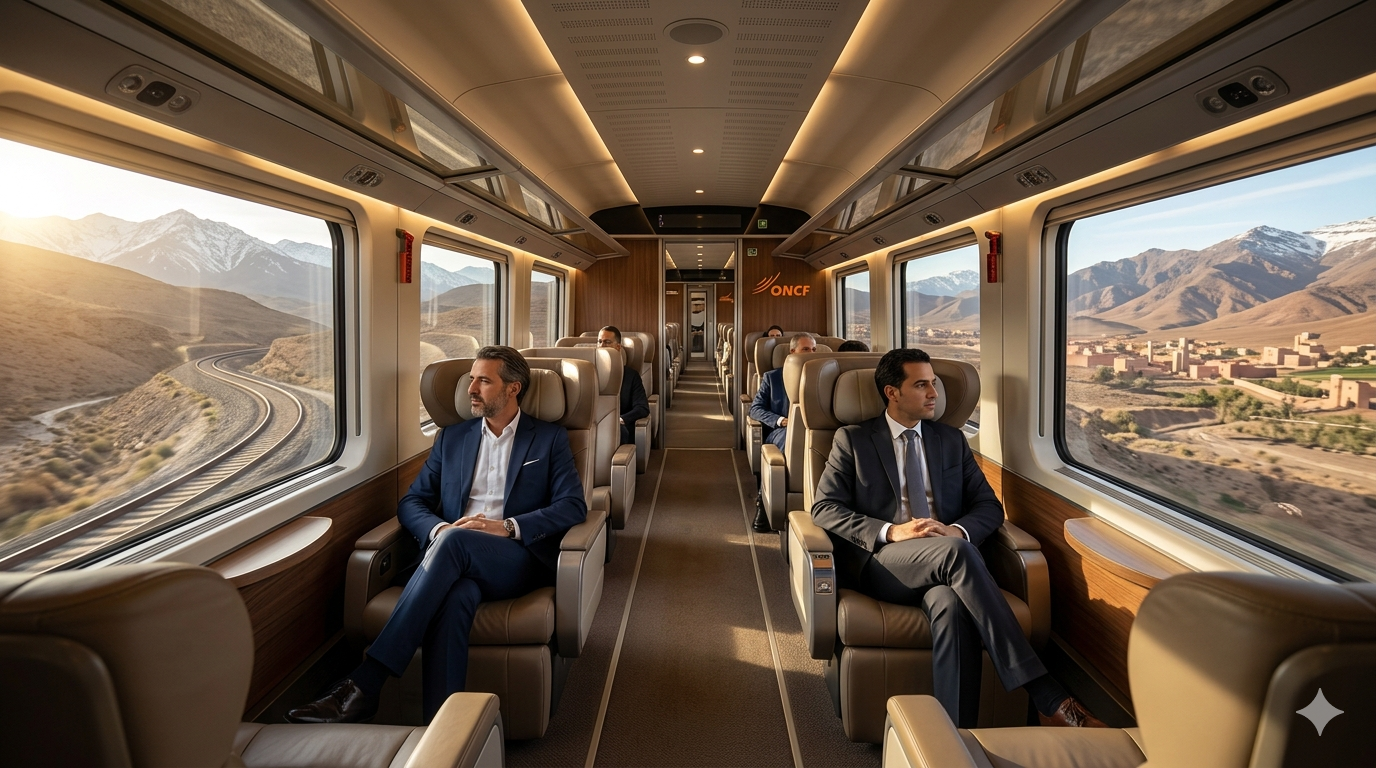
When comparing ONCF first class and second class accommodations, the differences extend far beyond the ticket price. First class represents premium rail travel in Morocco, designed for passengers seeking a more refined experience with enhanced comfort and exclusive amenities. Second class, while still offering a pleasant journey, caters to budget-conscious travelers and families who prioritize functionality over luxury.
The fundamental distinction lies in passenger capacity, seating arrangements, and onboard services. First class cabins accommodate fewer passengers per carriage, ensuring a more spacious and intimate travel environment. Second class compartments are designed for higher passenger volume, which means more people sharing the same space. Additionally, first class passengers enjoy access to quieter cars, dedicated staff attention, and premium facilities that simply don’t exist in standard class sections. Our detailed guide on ONCF 1st vs 2nd Class Train Casablanca Marrakech 2026 breaks down the popular Casablanca-Marrakech route specifically.
- Passenger density: First class: 4-6 passengers per compartment; Second class: 6-8 passengers per compartment
- Reserved seating: First class offers assigned seats; Second class features open seating with reservations
- Cabin types: First class includes both single and compartment options; Second class primarily compartments
- Age restrictions: First class welcomes all ages; Second class is family-friendly with no restrictions
Comfort and Seating: What Sets Them Apart
Comfort levels represent perhaps the most noticeable difference between ONCF’s two service tiers. First class seats are upholstered in premium fabric, featuring enhanced padding and superior ergonomic design. These seats recline to greater angles—typically 50-60 degrees—compared to second class seats which recline approximately 30-40 degrees. Legroom in first class averages 40 inches, while second class provides roughly 32 inches, making a substantial difference on longer journeys between northern and southern cities.
The seating configuration in premium versus standard train cabins also reflects different travel philosophies. First class compartments feature 2×2 seating arrangements, allowing companions to sit facing each other or alongside each other. Second class typically offers 2×3 configurations, meaning three passengers share one side of the compartment. Windows in first class are larger, offering better views of Morocco’s stunning landscapes. Climate control is individually adjustable in first class, whereas second class relies on centralized temperature management. For a comprehensive understanding of how to navigate these options, check our ONCF Train Guide 2026: How to Travel Morocco Smartly for expert recommendations.
- Seat width: First class: 21-22 inches; Second class: 18-19 inches
- Armrests: First class has padded, adjustable armrests; Second class features basic fixed armrests
- Headrests: First class includes memory foam headrests; Second class has standard cushioned headrests
- Footrests: Available in first class; Not standard in second class
Pricing Comparison and Value for Money
ONCF ticket pricing varies significantly between first and second class, with first class typically costing 40-60% more than second class for identical routes. On the popular Casablanca-Marrakech route (3.5 hours), second class tickets average 150-180 MAD ($15-18 EUR), while first class fares range from 250-320 MAD ($25-32 EUR). For longer journeys like Casablanca-Tangier (5 hours), second class costs approximately 200-240 MAD ($20-24 EUR), compared to first class at 340-400 MAD ($34-40 EUR).
Understanding the cost difference between cabin classes requires evaluating what you’re actually paying for. The premium isn’t arbitrary—it reflects genuine service enhancements, reduced crowding, and amenities. For budget travelers and families planning multiple train journeys, the cumulative cost difference matters significantly. However, for travelers on shorter routes or those with flexible budgets, the additional investment often pays dividends in stress reduction and journey enjoyment. When planning your bookings, our guide on How to Book ONCF Train Tickets Online (Step-by-Step for Tourists in 2026) will help you find the best deals and understand pricing nuances for 2026.
- Casablanca-Marrakech: First class 280 MAD vs Second class 165 MAD (difference: 115 MAD/$11)
- Casablanca-Fes: First class 320 MAD vs Second class 195 MAD (difference: 125 MAD/$13)
- Rabat-Tangier: First class 380 MAD vs Second class 220 MAD (difference: 160 MAD/$16)
- Early booking discounts: First class: 10-15% reduction; Second class: 5-10% reduction
Services and Amenities Available in Each Class
Onboard services and amenities diverge considerably between ONCF’s first and second class offerings. First class passengers receive complimentary refreshments including bottled water, premium tea, and light snacks. A dedicated attendant services first class compartments, addressing passenger needs throughout the journey. Free Wi-Fi is available in first class cars on most routes, allowing you to stay connected while traveling through Morocco’s beautiful countryside. Power outlets are standard at every first class seat, essential for charging devices during longer journeys.
Second class amenities focus on functionality rather than luxury. Passengers have access to a standard buffet car where beverages and snacks are available for purchase at reasonable prices (10-30 MAD per item). Toilets are maintained regularly but are simpler than first class facilities, which feature modern fixtures and complimentary toiletries. Second class passengers don’t receive complimentary refreshments, though the onboard staff remains professional and helpful. For detailed information about booking options with these services included, explore our article on ONCF Casablanca to Marrakech Train Schedule (2026 Timetable + Duration + Best Times to Travel) which covers amenities by train time.
- Complimentary beverages: First class includes premium tea, coffee, and water; Second class: none included
- Attendant service: First class has dedicated cabin staff; Second class shares staff across multiple cars
- Wi-Fi access: Available in first class; Limited or unavailable in second class
- Luggage allowance: First class: 40kg included; Second class: 30kg included
Making Your Choice: When First Class is Worth the Investment
Deciding whether upgrading to first class justifies the additional cost depends on several personal factors. First class becomes genuinely worthwhile on routes exceeding 4 hours—journeys like Casablanca-Tangier or Marrakech-Fes where extended seating comfort significantly impacts your experience. Business travelers valuing productivity benefit from dedicated workspace, power outlets, and reliable Wi-Fi. Travelers with mobility concerns or elderly passengers appreciate the spaciousness, easier bathroom access, and attentive staff support. Families with young children often find first class preferable due to quieter surroundings and reduced passenger density.
Book Your Morocco Journey
Compare trains, buses & shared taxis. Real-time availability, instant e-tickets, no hidden fees.
Check Routes & Book Now →Conversely, second class represents better value for short journeys under 3 hours, budget-conscious travelers, and those comfortable with moderate crowding. Younger travelers, backpackers, and social explorers often prefer second class, where they meet fellow travelers and experience authentic Moroccan rail culture. Off-peak travel times mean second class cars are frequently less crowded than feared. For tourists seeking economical options, our resource on How to Get Cheap ONCF Tickets in Morocco (Real Discounts + Best Booking Tips) offers strategies for maximizing value regardless of which class you choose. The decision ultimately reflects your priorities: whether you prioritize comfort and
Related Articles
- ONCF 1st vs 2nd Class Train Casablanca Marrakech 2026
- ONCF Train Guide 2026: How to Travel Morocco Smartly
- How to Book ONCF Train Tickets Online (Step-by-Step for Tourists in 2026)
- ONCF Casablanca to Marrakech Train Schedule (2026 Timetable + Duration + Best Times to Travel)
- How to Get Cheap ONCF Tickets in Morocco (Real Discounts + Best Booking Tips)
Frequently Asked Questions
What is the main difference between ONCF first class vs second class?
How much more expensive is ONCF first class compared to second class?
Does ONCF first class include meals and beverages?
Is ONCF first class worth it for short journeys?
What amenities do ONCF first class passengers get that second class doesn’t?
🚆 Planning your Morocco route?
Get our train, taxi & airport cheat sheets — plus fare updates when prices change.
Free, no spam, unsubscribe anytime.