

Is Morocco Safe in 2026? Honest Guide for Tourists (Includes Solo Women)
⚡ Quick Answer
Is Morocco Safe to Visit in 2026?
Yes — Morocco is safe for tourists. It is one of the most-visited countries in Africa with 13+ million tourists in 2024. Violent crime against tourists is rare. The main risks are petty theft and tourist scams in medinas. Women travelling solo should be aware of persistent harassment in major cities but Morocco is manageable and very rewarding.
| Risk Type | Level | Notes |
|---|---|---|
| Violent crime | 🟢 Low | Rare against tourists |
| Petty theft | 🟡 Medium | Pickpockets in medinas and Djemaa el-Fna |
| Scams | 🟡 Medium | Fake guides, inflated prices, misdirection |
| Harassment (women) | 🟡 Medium | Verbal, manageable with preparation |
| Terrorism | 🟢 Low | No major incidents since 2003 |
Is Morocco Safe? The Honest Answer
Morocco received over 13 million international tourists in 2024 and is consistently ranked among the safest destinations in Africa and the Middle East. The UK Foreign Office, US State Department, and Australian DFAT all classify Morocco as a standard-risk destination — the same rating as Italy, Turkey, or Egypt.
Violent crime against tourists is genuinely rare. The vast majority of problems tourists encounter in Morocco fall into two categories: petty theft and scams — both of which are easily mitigated with basic awareness.
Safety in Marrakech
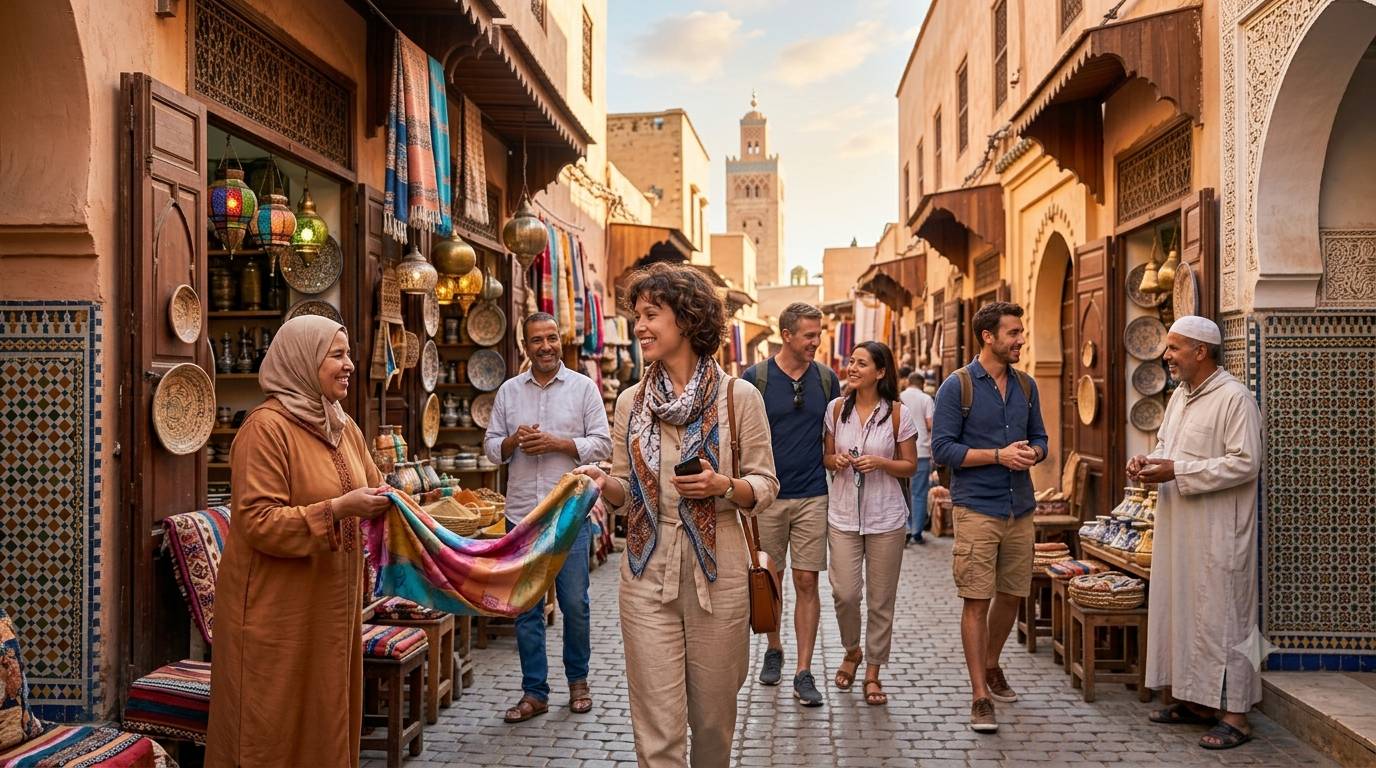
Marrakech is Morocco’s most-visited city and also the one that generates the most complaints from tourists. The medina can feel overwhelming and disorienting — which makes tourists vulnerable to persistent touts, fake guides, and misdirection scams.
Marrakech safety tips:
- Download an offline map (Maps.me or Google Maps offline) — getting genuinely lost in the medina is when scams happen
- If someone says “the square is closed today / there’s a festival” — it’s a lie. They want to redirect you to their friend’s shop.
- Agree on prices before getting in taxis or using unofficial guides
- Djemaa el-Fna at night is generally safe, but guard your phone and bag in crowds
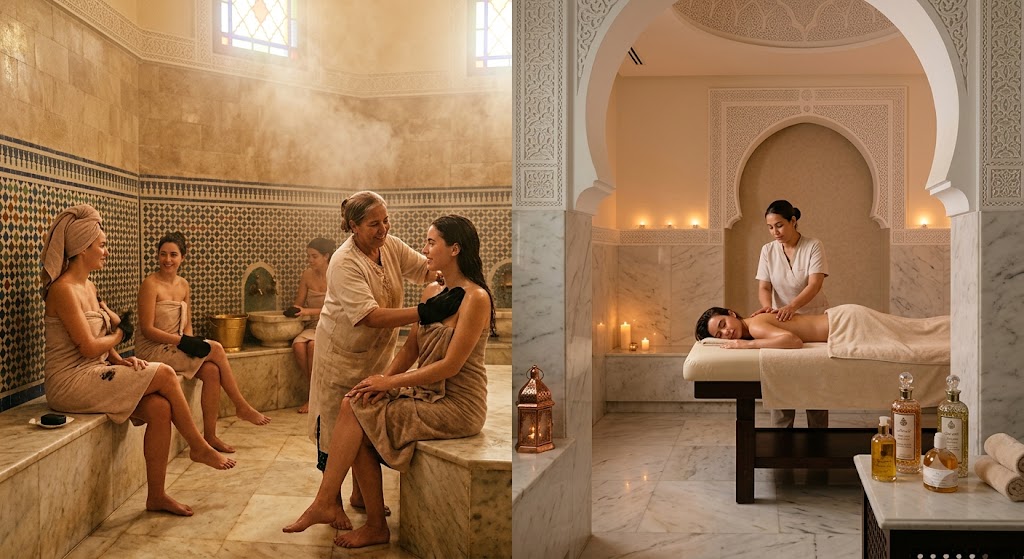
- Book your hammam through your riad — not through a stranger who approaches you on the street
Safety by City: Casablanca, Fes, Rabat, Tangier, Chefchaouen & the Sahara
Marrakech gets the most safety questions, but risk levels vary a lot by city. Here’s the honest breakdown for the rest of the country, based on Numbeo crime-index data and Moroccan Directorate of National Security figures.
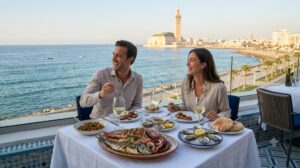
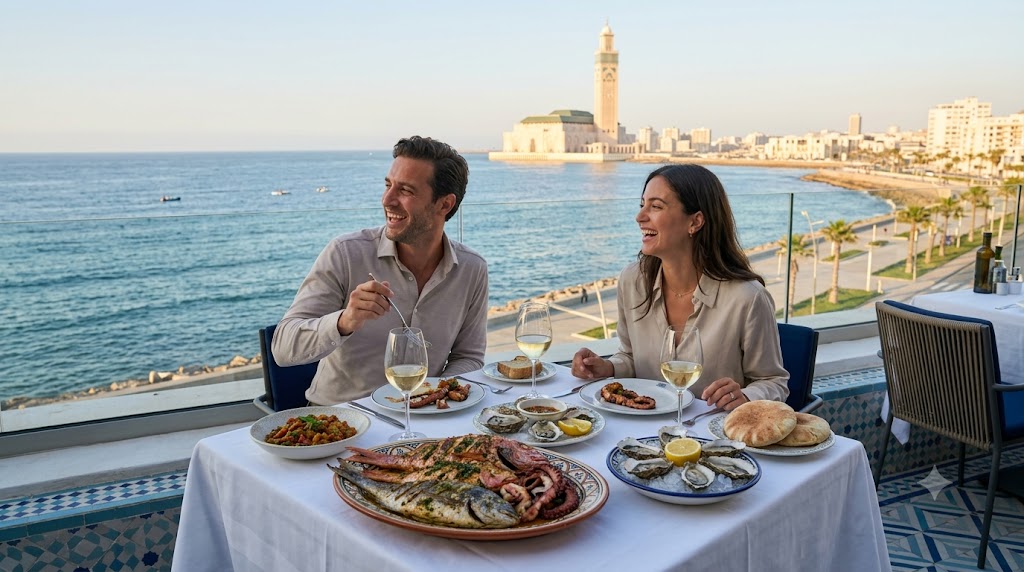
Casablanca — Morocco’s largest city (3.7 million people) has a moderate crime index, mostly petty theft and occasional muggings after dark. Tourist areas like the Hassan II Mosque and the Corniche are well-policed. Stick to main boulevards at night and use Uber rather than hailing taxis on the street.
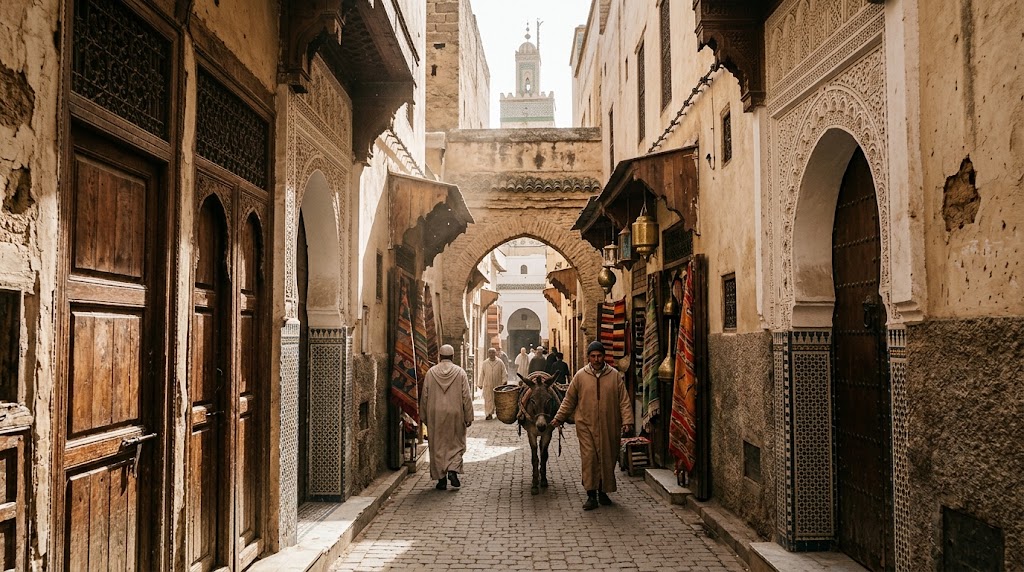
Fes — The medina here is even more of a maze than Marrakech’s, and it has a higher crime index, mostly pickpocketing and persistent touts in the tanneries and gates. Hire an official blue-badge guide for your first walk through, especially if you’re travelling solo — it also solves the navigation problem, since GPS is unreliable in the narrow alleys.
Rabat — As the political capital, Rabat has one of the lowest crime rates of any Moroccan city and a heavy security presence. It’s consistently the city foreign residents and returning tourists rate as the most relaxed to walk around, day or night.
Tangier — Tangier’s safety profile has improved significantly over the past decade as the port and beachfront areas were redeveloped. The old town (kasbah and medina) still sees petty theft and occasional harassment, so stick to daytime exploring there and be cautious near the port/border zone after dark.
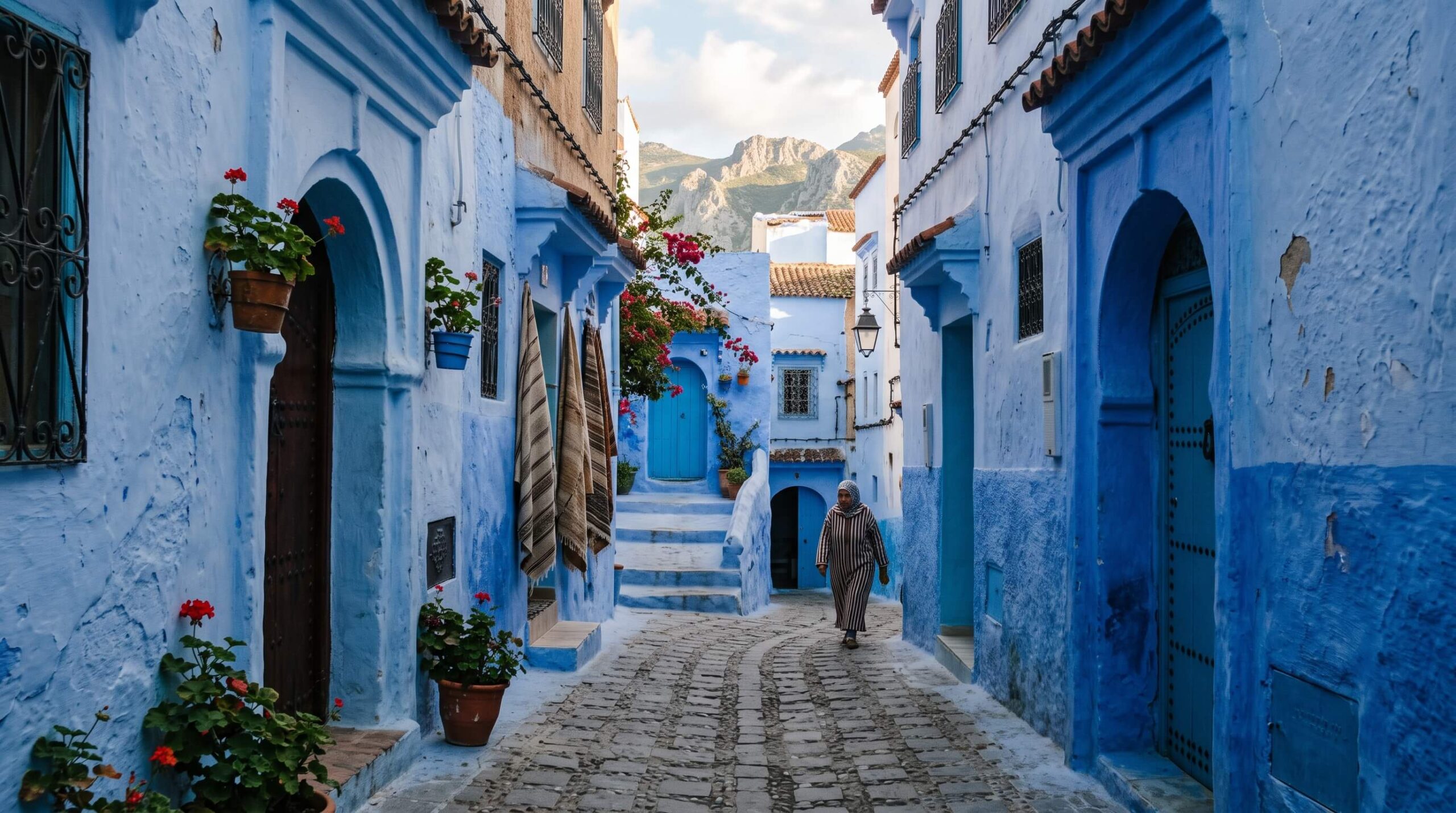
Chefchaouen — Consistently rated Morocco’s most relaxed city for tourists, including solo women. The blue medina is small, walkable, and low-crime, with only minor pickpocketing risk around the main square. See our full Chefchaouen guide for more.
Sahara & rural areas (Merzouga, Atlas villages) — Crime is minimal, but the risks here are environmental, not criminal: extreme heat/cold, isolation, and unlicensed “desert tours” that cut corners on safety. Book desert camps through a licensed operator and always tell your riad or camp where you’re headed.
Is Morocco Safe for Solo Female Travellers?
This is the most-asked question about Morocco safety — and it deserves a nuanced answer.
Morocco is manageable and rewarding for solo female travellers, but it does require more preparation than, say, Spain or Thailand. Verbal harassment (catcalling, persistent approaches) is common in major medinas, especially Marrakech. Physical assault is rare.
Tips for women travelling Morocco alone:
- Dress modestly in medinas (loose clothing, covered knees and shoulders) — this significantly reduces attention
- Walk with purpose and avoid prolonged eye contact with strangers who approach you
- If someone follows you, walk into a cafe or shop and sit down
- Chefchaouen and Essaouira are significantly more relaxed than Marrakech or Fes for solo women
- Book accommodation in advance — arriving at a medina without a booking, asking for directions, creates vulnerability
- Use official taxis (petit taxis) rather than accepting rides from strangers
Thousands of solo female travellers visit Morocco every month without incident. Go — but go prepared.
Top-Rated Tours & Experiences
Scams to Watch Out For in Morocco
Understanding common scams eliminates 90% of tourist problems in Morocco:
- Fake guide scam: A friendly local offers to show you around, then leads you to carpet shops and demands payment. Say “no thank you” and walk away — never follow a stranger into a shop.
- “The souk is closed today”: The souk you want is never closed. This is always a redirect to a specific shop.
- Henna artist scam: Women in the Djemaa el-Fna offer free henna, then demand 200+ MAD. If you want henna, agree on a price before they start.
- Snake charmer/photo tax: If you photograph performers on Djemaa el-Fna, they will demand money. Only photograph if you intend to pay (10–20 MAD is expected).
- Taxi overcharging: Always insist on the meter (compteur) in petit taxis, or agree the price in advance for grand taxis.
- Argan oil cooperatives: Some are legitimate women’s cooperatives; some are tourist traps. Ask to see the certification.
Is Morocco Safe to Drive?
Morocco’s main highways (autoroutes) are excellent and safe. The mountain roads through the High Atlas are well-maintained but require care in winter (snow/ice above 2,000m). The main hazard is other drivers — Morocco’s road accident rate is higher than Western Europe. Drive defensively, especially on national routes (N-roads) where overtaking is aggressive.
Is Morocco Safe from Terrorism?
Morocco has been largely free from terrorist incidents since the 2003 Casablanca bombings. The government runs an extensive counter-terrorism operation and Morocco is considered one of the most secure states in North Africa. The US State Department notes a “heightened” global threat level for any travel, which is standard across almost every country today.
Is Morocco Safe for Americans?
Yes. The US State Department rates Morocco Level 2: Exercise Increased Caution — the same tier as the UK, France, Germany, and most of Western Europe. It isn’t a country-specific warning; Level 2 is the department’s standard baseline for almost any international travel and reflects generic global risk factors (petty crime, occasional civil unrest), not any threat aimed at American visitors specifically.
Morocco’s tourism economy is heavily built around Western visitors, and Americans are a normal, welcomed presence in every major city — you won’t stand out any more than any other foreign tourist. There’s no history of anti-American sentiment affecting travelers, and the monarchy maintains close diplomatic and security ties with the US.
Practical notes for US travelers:
- No visa required for US citizens for stays under 90 days — just a passport valid 6+ months beyond your entry date
- The US Embassy is in Rabat; there’s a consulate in Casablanca. Enrolling in the State Department’s free STEP program means you’ll get security alerts and can be reached in an emergency
- US debit/credit cards work at ATMs in every city — bring one with no foreign transaction fees rather than carrying large amounts of cash
- US dollars aren’t widely accepted for purchases; you’ll need Moroccan dirham (MAD), available from ATMs or exchange bureaus on arrival
Every city, the Sahara, transport, costs, safety, and a full Darija phrasebook — free, straight to your inbox.
Get the free guide →Safest Cities in Morocco for Tourists
- Chefchaouen — the most relaxed tourist destination in Morocco, very low harassment, beautiful and calm
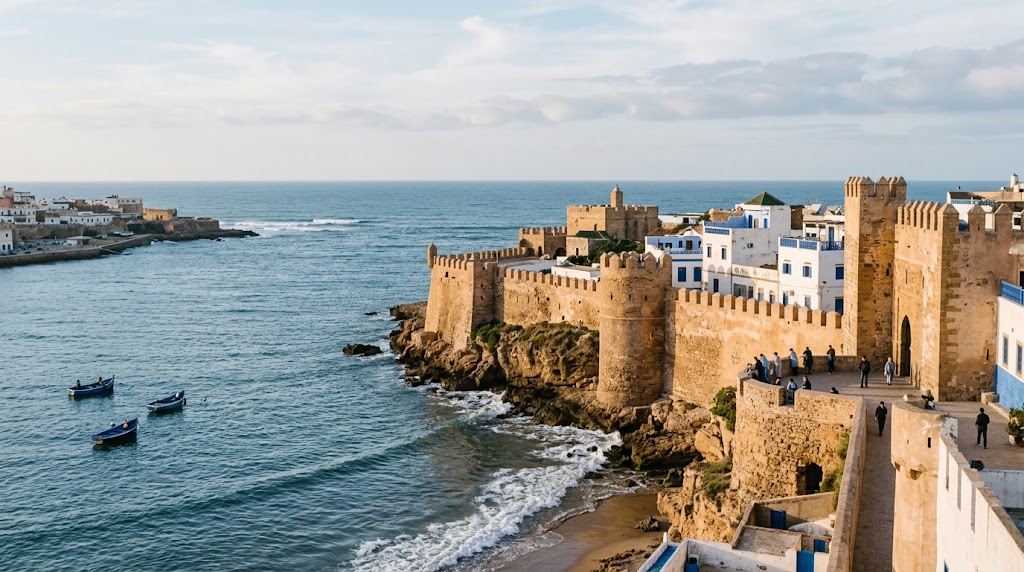
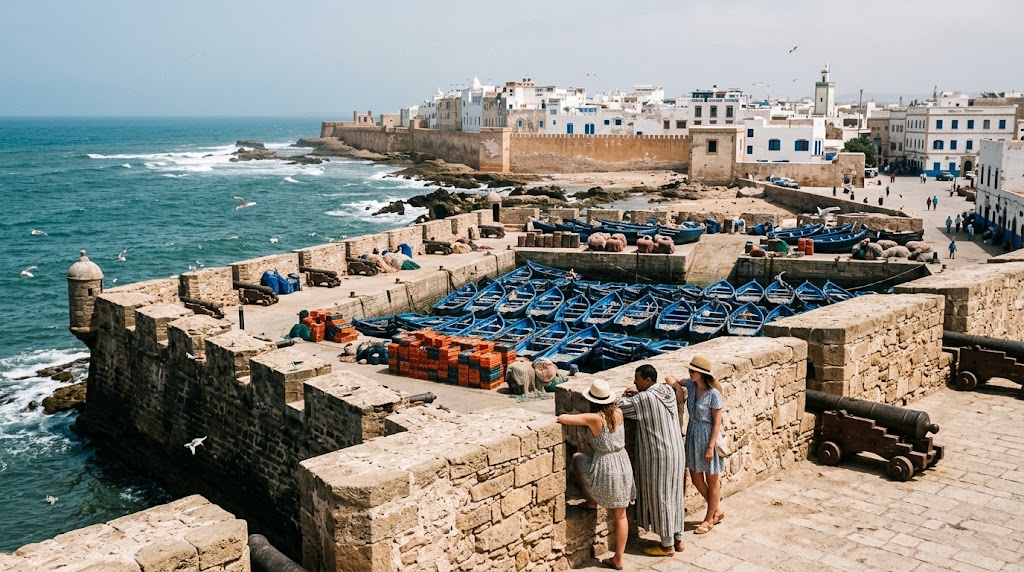
- Essaouira — windy Atlantic coast town, laid-back vibe, minimal tout activity
- Agadir — resort town, very Western in feel, beach-oriented, extremely low risk
- Ifrane — alpine town, zero tourist hassle, Swiss-like atmosphere
- Merzouga — desert town, focused on Sahara tourism, generally straightforward
🎟️ Top-Rated Morocco Tours & Experiences:
Find the Best Guided Tours & Experiences
Compare 500+ Morocco tours — desert camps, city tours, food walks & day trips. Free cancellation on most.
Every city, the Sahara, transport, costs, safety, and a full Darija phrasebook — free, straight to your inbox.
Get the free guide →🌍 Wanna hear more from Morocco?
Weekly travel tips, hidden gems and new guides — straight to your inbox.
Free, no spam, unsubscribe anytime.