

Morocco Road Trip: Best Routes Guide
Planning a Morocco road trip in 2026 is the ultimate way to experience this North African gem at your own pace, discovering hidden riads, stunning desert landscapes, and vibrant medinas beyond the typical tourist routes.
Whether you’re a seasoned driver or exploring mountain passes for the first time, this comprehensive guide covers everything you need to know about self-driving through Morocco, from route planning to essential safety tips that will make your adventure unforgettable.
🚄 Book Transport
Compare Trains, Buses & Transfers
Compare all routes across Morocco — ONCF trains, CTM buses, shared taxis & airport transfers. Instant confirmation.
Top-Rated Tours & Experiences
✓ Real-time availability · Instant e-ticket · No hidden fees
From the Atlantic coast to the Sahara Desert, a Morocco road trip offers unparalleled freedom to explore ancient kasbahs, bustling souks, and breathtaking natural wonders at your leisure.
Planning Your Morocco Road Trip: Essential Routes and Highlights
Before embarking on your Moroccan driving adventure, understanding the country’s geography and infrastructure is crucial. Morocco spans approximately 446,550 square kilometers with diverse landscapes ranging from Mediterranean coastlines to the High Atlas Mountains and the sweeping Sahara. The primary road network consists of well-maintained highways (autoroutes) connecting major cities, though mountain roads and rural routes require more careful navigation. Most travelers prefer organizing their Morocco road trip between October and April when temperatures are moderate and rainfall minimal, though summer driving is entirely feasible with proper preparation.
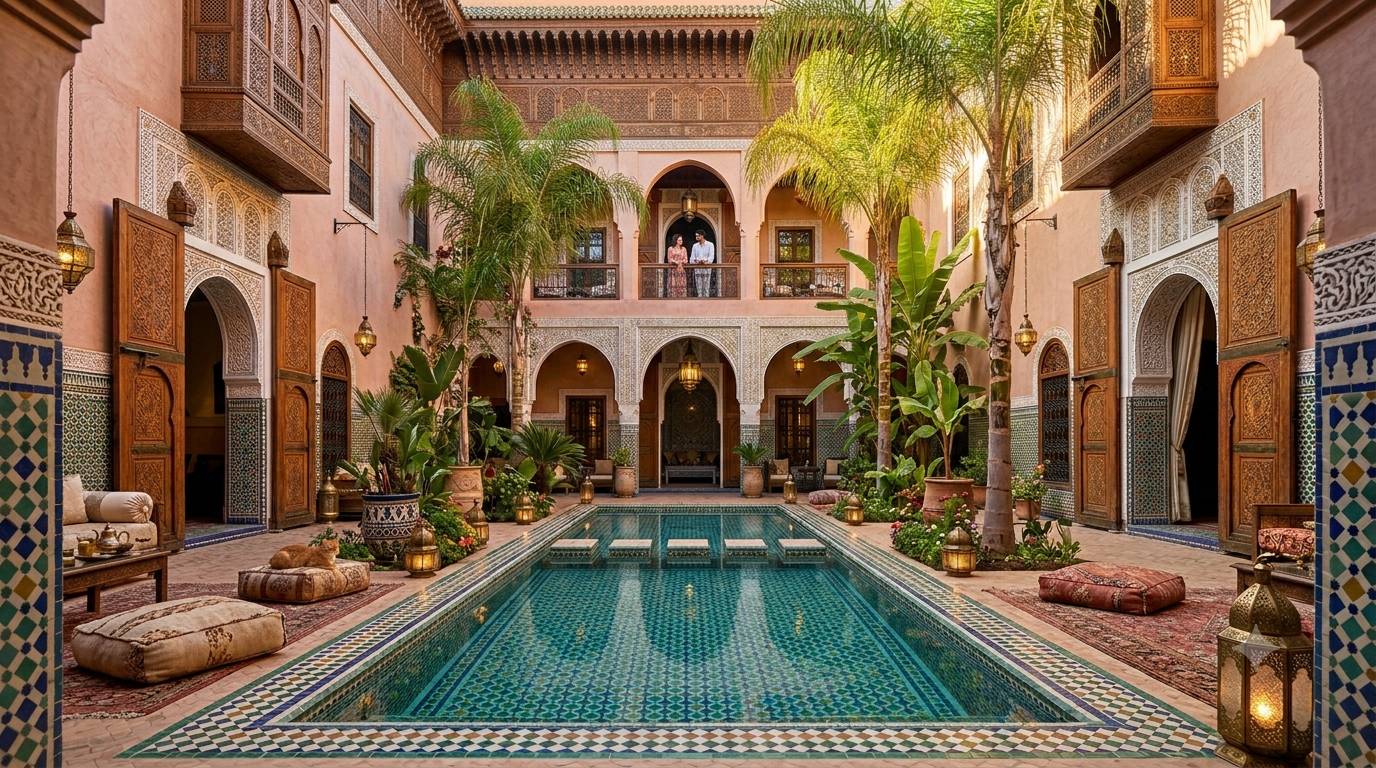
The typical road trip duration ranges from 7 to 14 days, allowing you to cover 1,500-2,500 kilometers comfortably. Daily driving distances of 300-400 kilometers are recommended to maintain road safety and enjoy regional attractions. Consider staying at carefully selected accommodations throughout your journey; check our Best Airbnb Rentals in Morocco: Top Locations, Prices & Tips for Tourists (2026) guide for budget-friendly options ranging from 250-600 MAD (€23-55) per night in different regions.
- Plan your itinerary around major cities: Casablanca, Fez, Marrakech, Agadir, and Tangier
- Identify scenic routes through the Atlas Mountains and Anti-Atlas regions
- Research seasonal festivals and events; our Best Festivals in Morocco 2026 (Full Calendar + Dates, Tips & Highlights) details cultural experiences worth timing your trip around
- Book accommodation in advance during peak seasons (December-February, July-August)
- Download offline maps and Google Maps for areas with spotty connectivity
Best Routes for Your Morocco Road Trip 2026
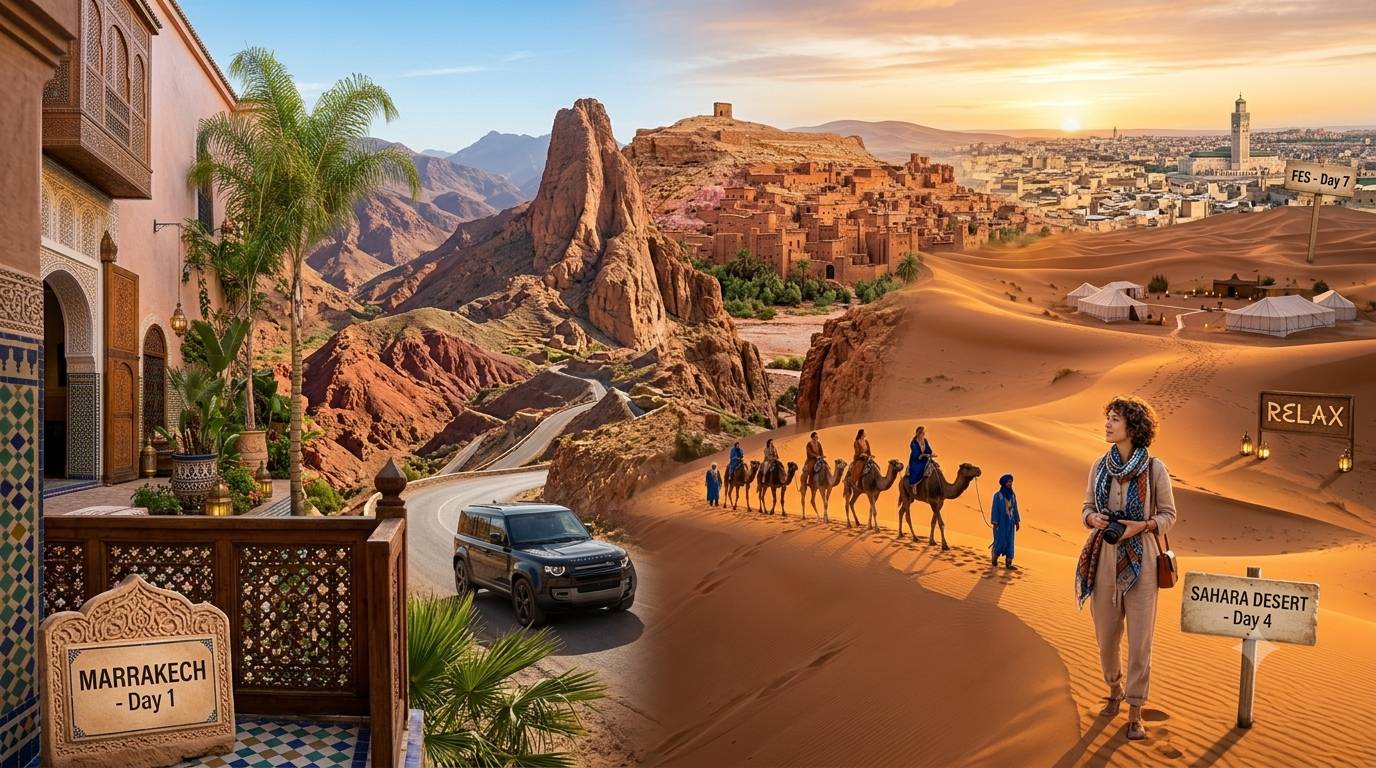
The best Morocco road trip routes depend on your interests and available time. The Classic Loop (Casablanca-Fez-Marrakech-Agadir-Casablanca) covers approximately 1,500 kilometers and takes 10 days, ideal for first-time visitors. This coastal-to-mountain-to-desert route showcases Morocco’s diversity perfectly. The Sahara Route pushes south from Ouarzazate through Merzouga, adding 2-3 days and offering unforgettable desert experiences where you’ll encounter Berber villages and dramatic dune landscapes.
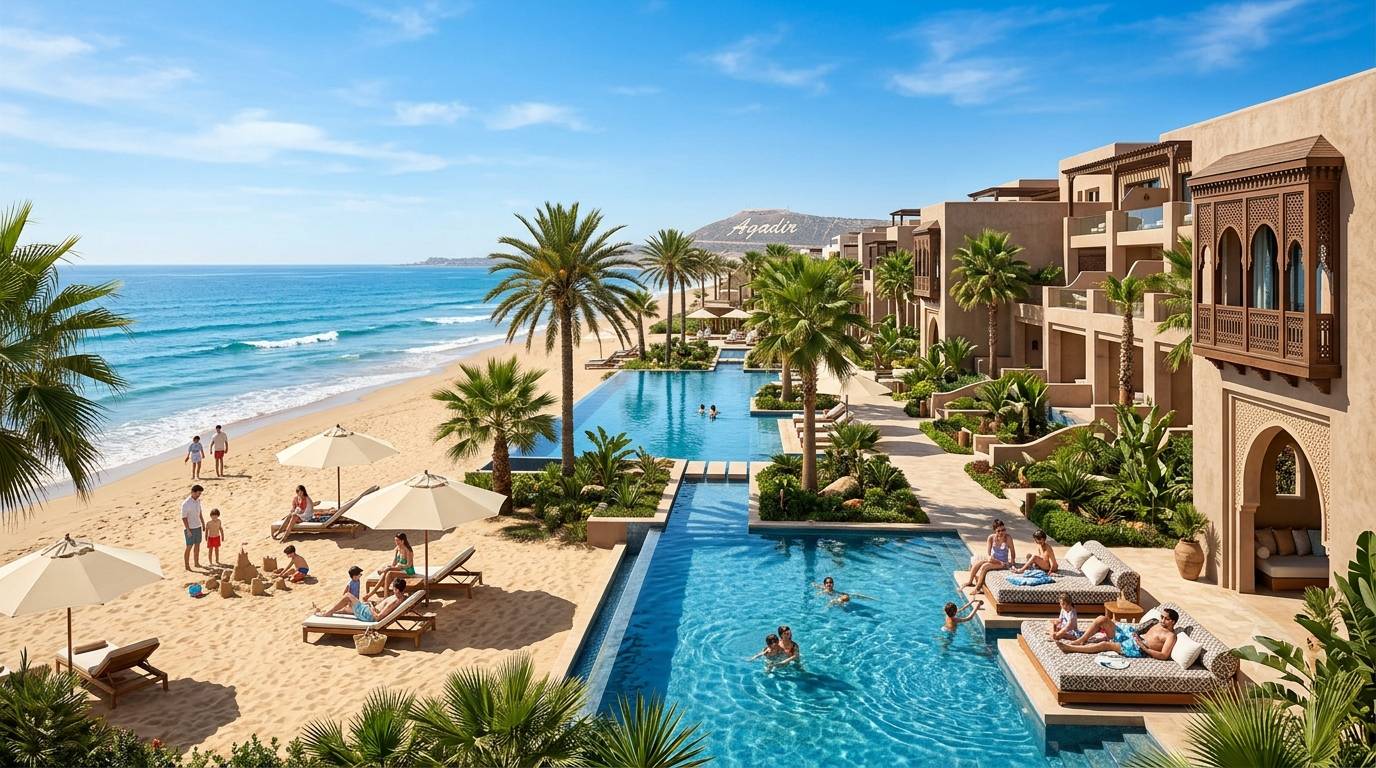
For mountain enthusiasts, the Atlas Traverse connects Marrakech through Imlil Valley to Fez, crossing passes exceeding 2,000 meters elevation. This scenic road trip through Morocco takes 4-5 days and rewards careful drivers with panoramic vistas and authentic mountain communities. Alternatively, the Mediterranean Route follows the northern coast from Tangier to Nador, featuring charming coastal towns like Tetouan and Chefchaouen. Fuel costs average 6.5-7 MAD (€0.60-0.65) per liter, so budget approximately 500-800 MAD (€45-75) for a typical 1,500-kilometer journey depending on vehicle fuel efficiency.
- Classic Loop: Best for comprehensive cultural immersion and diverse landscapes
- Sahara Route: Perfect for desert photography and adventure-seeking travelers
- Atlas Traverse: Ideal for trekking enthusiasts and mountain photographers
- Mediterranean Coastal Drive: Excellent for beach lovers and seafood enthusiasts
- Royal Cities Tour: Focuses on Rabat, Fez, Marrakech, and Meknes historical significance
Driving Tips and Safety Considerations
Driving safely during your Morocco road trip requires understanding local traffic customs and road conditions. Moroccan drivers use a mix of aggressive and leisurely driving styles; maintain defensive driving practices and avoid night driving whenever possible. Speed limits are 120 km/h on autoroutes, 100 km/h on regional roads, and 40-60 km/h in populated areas. International Driving Permits alongside valid passports are legally required; many rental agencies verify documentation before vehicle handover. Vehicle insurance is mandatory—basic coverage costs approximately 150-300 MAD (€14-28) daily for standard sedan rentals.
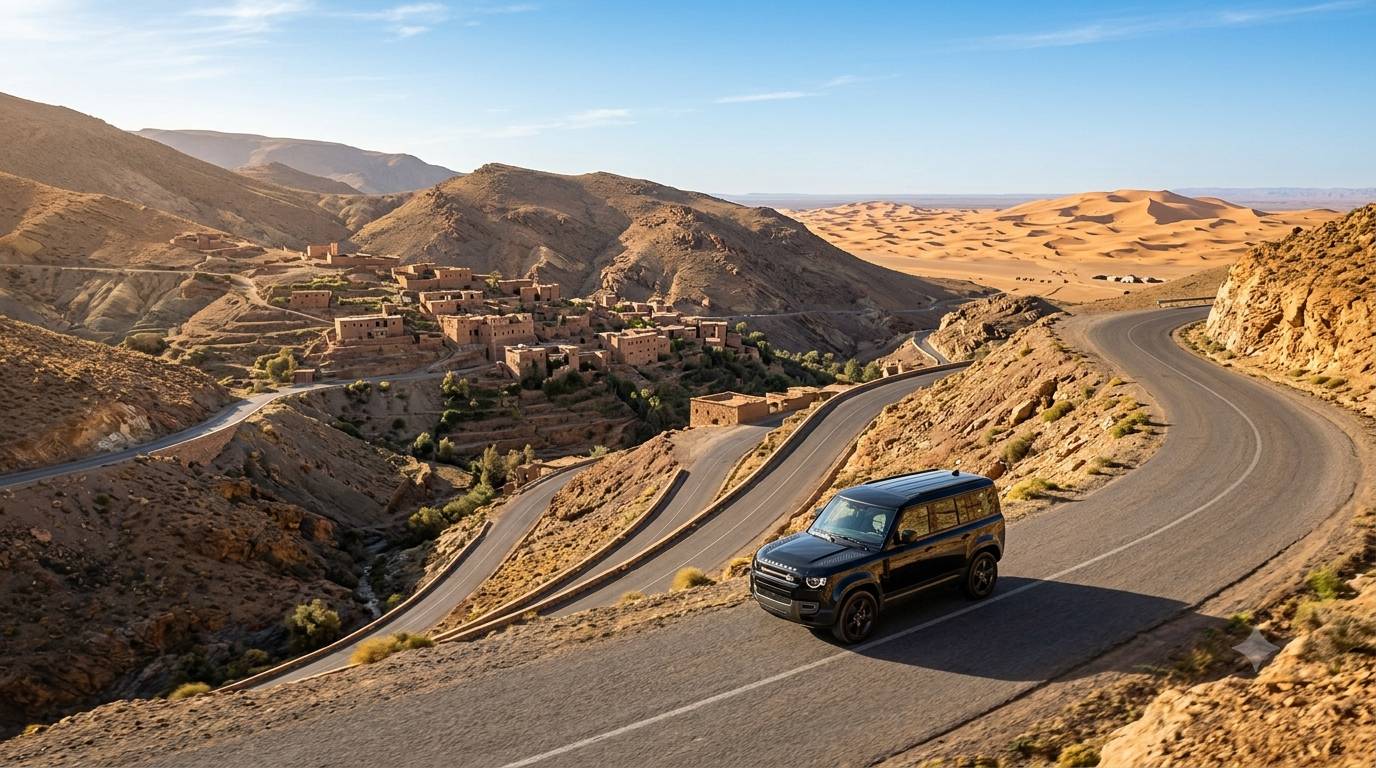
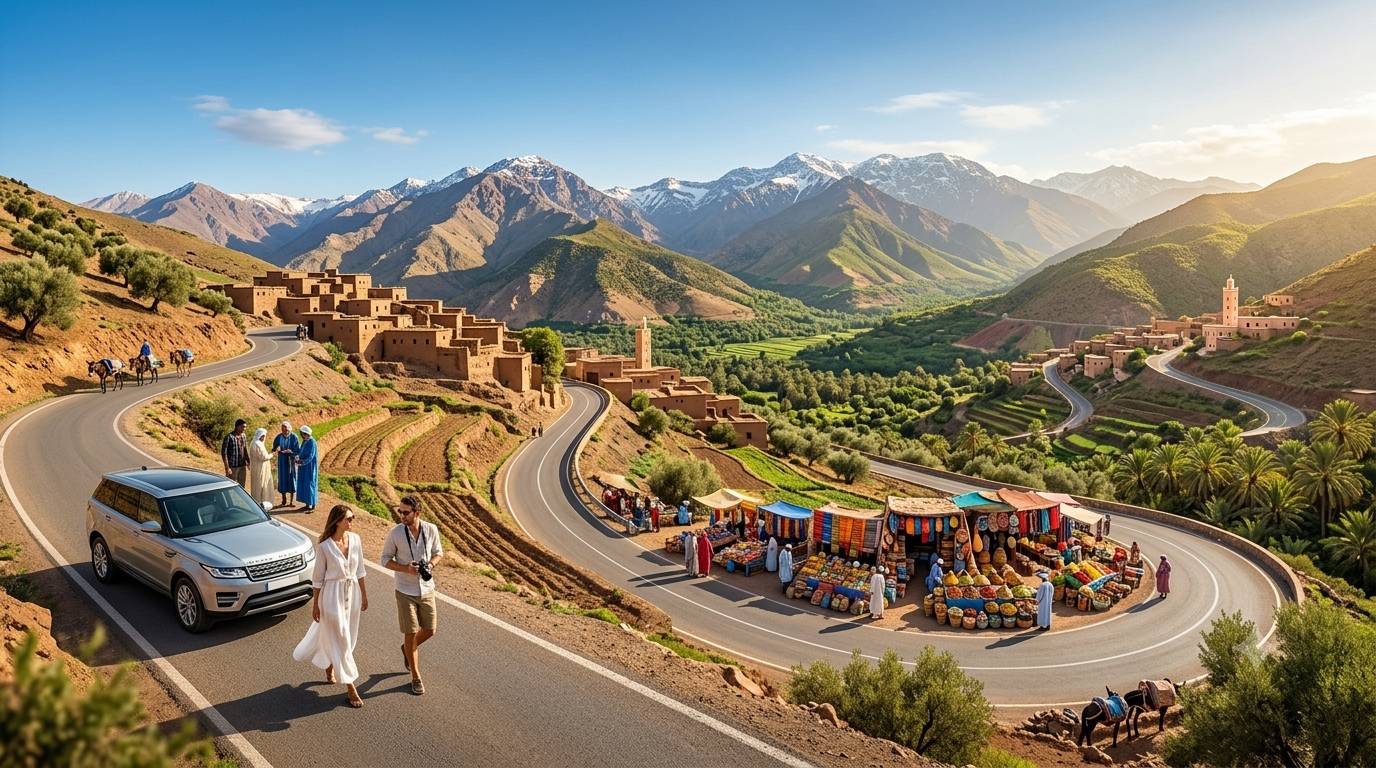
Mountain driving demands extra caution as hairpin turns and narrow passes characterize Atlas and Anti-Atlas routes. Use lower gears descending steep sections, honk when approaching blind curves, and watch for donkeys, sheep, and pedestrians sharing the roadway. If driving to Sahara regions, carry emergency supplies: extra water, tire repair kits, first-aid equipment, and portable phone chargers. When reaching remote areas, ensure you have reliable navigation; note that cell coverage varies significantly, so staying connected matters—check our Does eSIM Work in the Sahara Desert Morocco 2026? Coverage & Tips for detailed connectivity solutions before departing.
- Always drive with headlights on, even during daylight hours
- Carry international driving documentation and vehicle insurance certificates
- Use GPS navigation but also maintain printed maps for backup
- Avoid driving between 11 PM and 6 AM in unfamiliar areas
- Fill fuel tanks completely when leaving major cities—rural stations may have limited fuel
- Familiarize yourself with basic Arabic and French road signs before departure
Regional Attractions and Stops Along Your Journey
Your Morocco road trip journey connects incredible regional highlights spanning the country’s geographic diversity. Starting from Casablanca, visit the Hassan II Mosque (free admission to exterior, 70 MAD/€6.50 interior tours) before heading southeast toward Fez. The Imperial Cities Route through Fez, Meknes, and Rabat showcases Morocco’s historical richness with well-preserved medinas, palaces, and gardens. Entrance fees to major monuments typically range 50-70 MAD (€4.50-6.50).
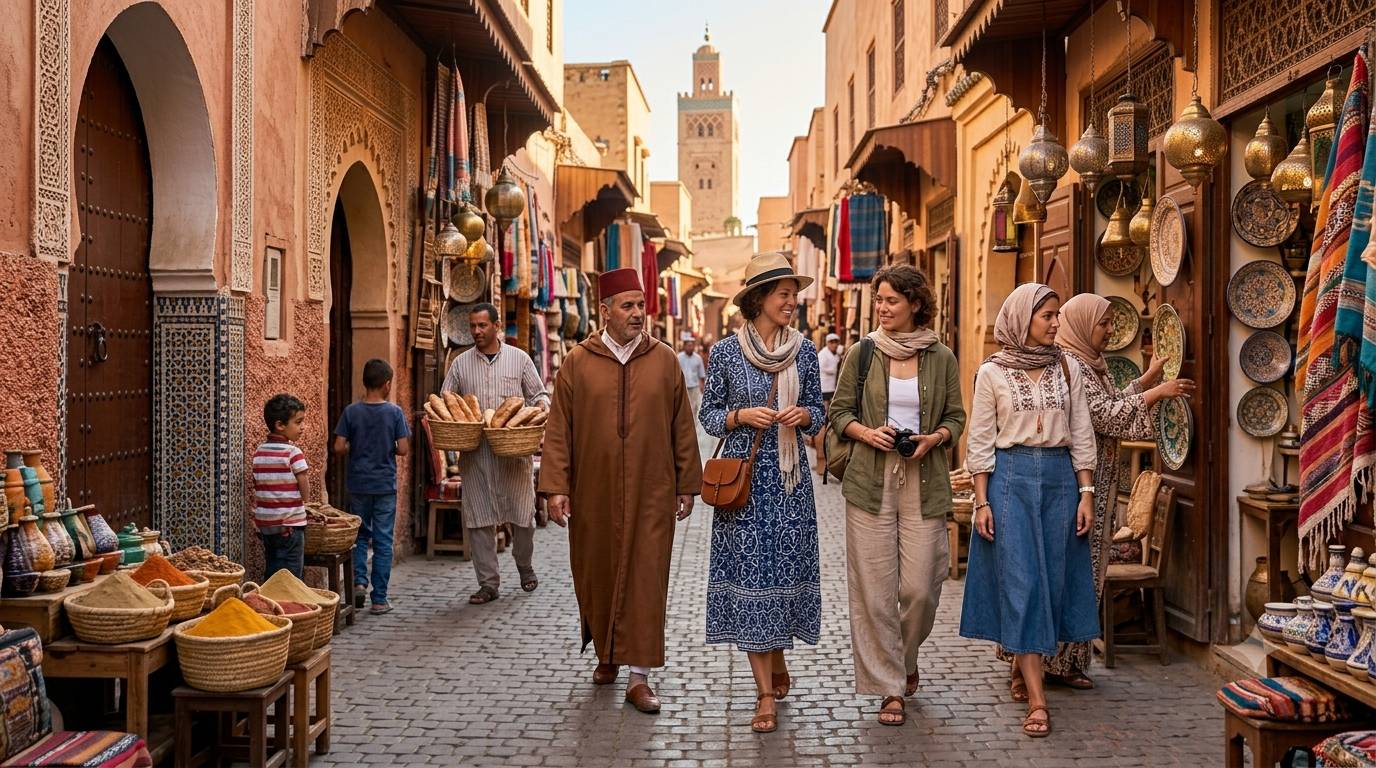
The Marrakech-Ouarzazate corridor opens gateway routes into desert experiences, featuring the spectacular Kasbah Ait Benhaddou (UNESCO World Heritage Site, 70 MAD/€6.50 entry) and Dades Valley. Beyond these major attractions, consider leisurely detours through mountain villages, argan oil cooperatives, and Berber markets where authentic experiences cost minimal fees. Should you prefer alternative transportation, our Morocco Train Travel Guide: ONCF Routes, Tickets & Timetables Explained covers scenic rail options for specific segments of your journey.
- Casablanca: Hassan II Mosque, Corniche seafront promenade, local restaurants (meals 60-150 MAD/€5.50-14)
- Fez: Medieval medina exploration, leather tanneries, artisan workshops (guided tours 250-400 MAD/€23-36)
- Marrakech: Jemaa el-Fnaa square, Koutoubia Mosque, Saadian Tombs (50-70 MAD/€4.50-6.50)
- Ouarzazate: Film studios, Kasbah Ait Benhaddou, Dades Valley scenic drives
- Merzouga: Desert camps, camel trekking, Erg Chebbi dunes (overnight camps 400-800 MAD/€36-73)
Preparation Checklist for a Successful Morocco Road Trip
Comprehensive preparation ensures your Morocco road trip proceeds smoothly without unexpected complications. Begin by securing an International Driving Permit (IDP) from your home country’s automobile association minimum 30 days before departure. Book rental vehicles in advance through reputable companies offering comprehensive insurance packages; daily rates range 400-1,200 MAD (€36-110) for economy to premium vehicles. Confirm that your vehicle includes spare tires, functional jack, emergency triangle, and basic repair tools.
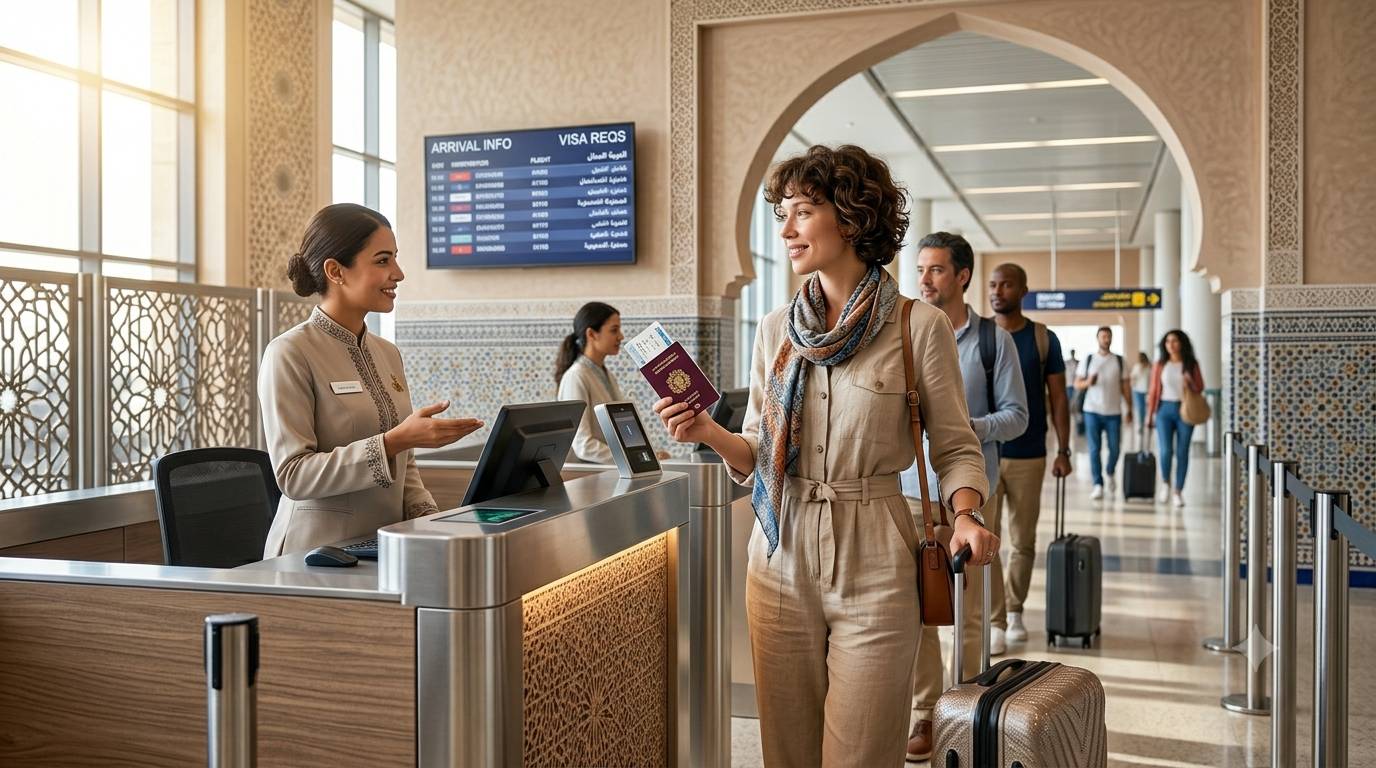
Verify your passport validity extends six months beyond your travel dates and confirm visa requirements based on your nationality. Purchase comprehensive travel insurance covering vehicle rental, medical emergencies, and trip cancellation (approximately 150-300 MAD/€14-28 for two-week coverage). Register your mobile phone for international roaming or purchase local SIM cards at airports (25-50 MAD/€2.25-4.50 with 5GB data). Create digital copies of all important documents stored separately from originals. Test your navigation systems, download offline maps, and establish emergency contact information for roadside assistance services.
Book Your Morocco Journey
Compare trains, buses & shared taxis. Real-time availability, instant e-tickets, no hidden fees.
Check Routes & Book Now →- Morocco Train Travel Guide: ONCF Routes, Tickets & Timetables Explained
- Best Airbnb Rentals in Morocco: Top Locations, Prices & Tips for Tourists (2026)
- Does eSIM Work in the Sahara Desert Morocco 2026? Coverage & Tips
- Does eSIM Work in the Sahara Desert Morocco 2026? Coverage & Tips
- Best Festivals in Morocco 2026 (Full Calendar + Dates, Tips & Highlights)
Related Articles
Frequently Asked Questions
What is the best time to take a Morocco road trip?
Do I need an international driving permit for a Morocco road trip?
How long should a Morocco road trip take?
What type of vehicle is best for a Morocco road trip?
Are roads safe for a Morocco road trip?
🌍 Wanna hear more from Morocco?
Weekly travel tips, hidden gems and new guides — straight to your inbox.
Free, no spam, unsubscribe anytime.