

Merzouga Village Travel Guide: Desert Gateway
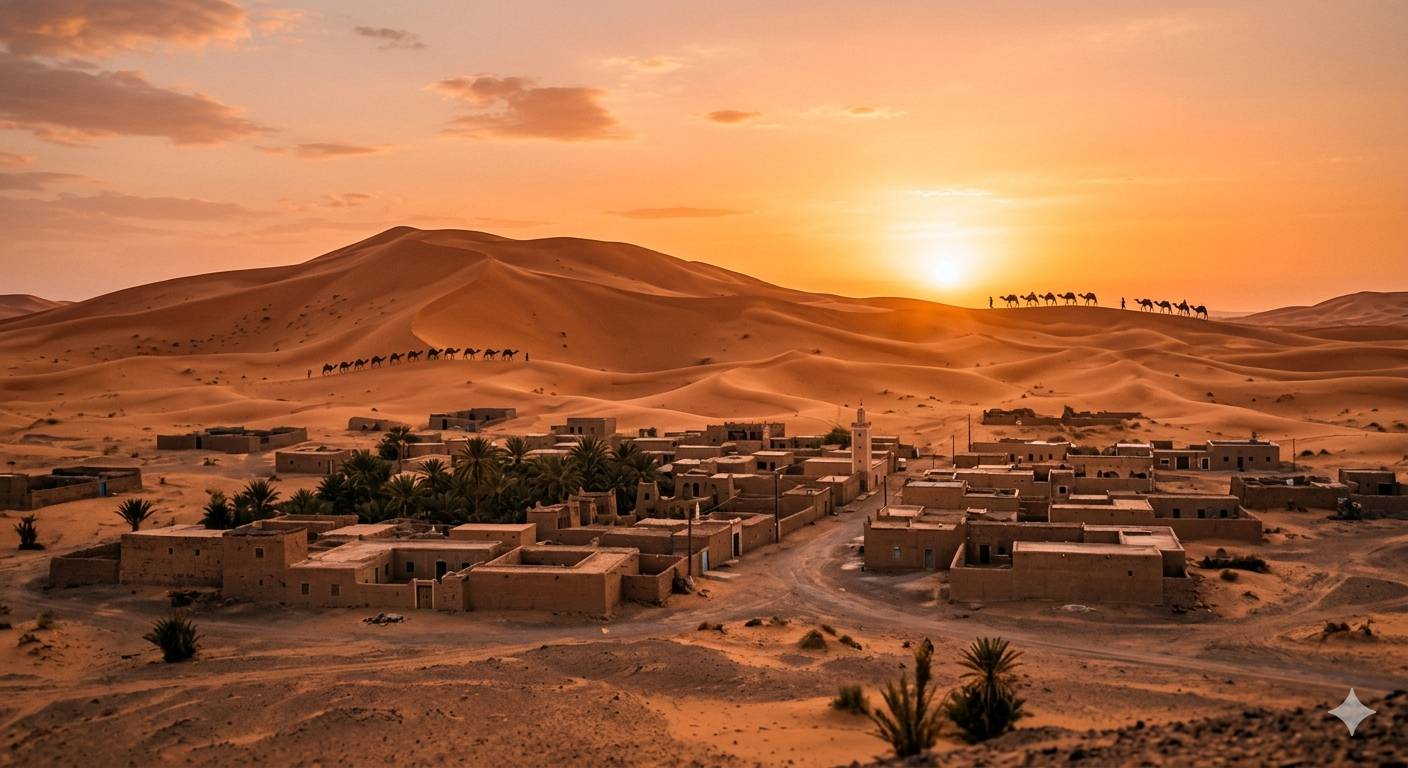
A Merzouga village guide is essential for anyone planning to experience Morocco’s most iconic desert destination. Nestled at the edge of the Erg Chebbi dunes, this small Saharan settlement has transformed into a premier tourist hub while maintaining its authentic Berber charm and desert character.
Merzouga sits 465 kilometers southeast of Fes and serves as the gateway to some of North Africa’s most breathtaking landscapes. The village itself is home to around 2,000 residents who live in harmony with the surrounding desert ecosystem, offering visitors a genuine glimpse into traditional Saharan life.
Whether you’re seeking camel trekking adventures, stargazing experiences, or cultural immersion, this Merzouga guide covers everything you need to know before visiting this extraordinary destination in 2026.
Merzouga Village Guide: Essential Information for First-Time Visitors
The Merzouga travel guide starts with understanding the village’s unique position as a desert oasis community. Merzouga experiences extreme temperatures, with summer highs reaching 45°C (113°F) and winter lows dropping to near freezing. The best time to visit is between October and April when temperatures range from 15-25°C (59-77°F). This small settlement lacks the tourist infrastructure of major cities like Marrakech, which is part of its charm—you’ll find no shopping malls or chain restaurants here, only authentic desert hospitality.
The village is relatively compact and easy to navigate on foot, with most accommodations and restaurants clustered near the main road. To deepen your cultural knowledge, consider that Merzouga sits in the Tafilalt region, home to the Ait Hdidou Berber tribe who have inhabited these lands for centuries. For comprehensive context about Morocco’s diverse attractions, check our Best Things to Do in Marrakech (Tours & Tickets) to understand how Merzouga compares to other Moroccan destinations. The village has no ATMs, so bring cash (MAD—Moroccan Dirhams) from larger cities. One euro equals approximately 11 MAD as of 2026.
- Population: Approximately 2,000 residents
- Distance from Fes: 465 kilometers (290 miles)
- Elevation: 790 meters (2,591 feet)
- Best visiting season: October to April
- Currency: Moroccan Dirhams (no ATMs in village)
- Language: Arabic, Tamazight (Berber), and French
Top Attractions and Natural Wonders in Merzouga
The undisputed star of any Merzouga village guide is the magnificent Erg Chebbi dune field. Stretching across 192 square kilometers, these golden sand dunes rise up to 150 meters (492 feet) high, creating an otherworldly landscape that looks like it belongs in fantasy films. The dunes shift constantly with the wind, meaning no two visits are ever identical. Sunrise and sunset over Erg Chebbi are absolutely spectacular, painting the sand in hues of orange, red, and purple. Most visitors experience the dunes through organized excursions rather than solo exploration, as navigating the vast expanse requires local expertise.
Beyond the dunes, Merzouga offers several natural wonders worth exploring during your desert village visit. Lake Merzouga (Dayet Srij) is a seasonal saltwater lake that appears after winter rains, attracting flamingos and other migratory birds—a photographer’s dream from November through March. The nearby Gnaoua Rock Formation provides stunning geological views and cultural significance. For travelers interested in exploring Morocco’s cultural calendar, our Fes Events in April 2026 (Cultural Calendar + Best Things to Do) highlights festivals and traditions found throughout the region. The Tafilalt Palm Grove, the world’s largest palm oasis at approximately 200 square kilometers, surrounds the village and demonstrates remarkable desert agriculture.
- Erg Chebbi dunes: 192 sq km of golden sand, dunes up to 150m high
- Lake Merzouga: Seasonal saltwater lake, best November-March
- Tafilalt Palm Grove: World’s largest palm oasis
- Gnaoua Rock Formation: Geological and cultural landmark
- Ifrane National Park: 51 km away, cedar and oak forests
Best Activities and Experiences in the Sahara Desert
Camel trekking remains the quintessential Merzouga desert activity that defines most visitors’ experiences. A three-day, two-night camel trek costs between 1,200-1,800 MAD (€108-€164) per person, including meals and Bedouin camp accommodation. These journeys take you deep into Erg Chebbi, where you’ll sleep under countless stars in traditional Berber tents, dine on tagines cooked in sand, and experience genuine Saharan hospitality. One-day treks (450-600 MAD / €41-€55) and two-day options (800-1,200 MAD / €73-€109) cater to different schedules and budgets.
For non-camel experiences, quad biking and 4×4 desert tours offer alternative ways to explore the dunes. A half-day quad adventure typically costs 400-600 MAD (€36-€55), while full-day 4×4 tours range from 600-900 MAD (€55-€82) per person. Sandboarding and sand sledding are increasingly popular activities, often combined with dune exploration packages. Night-time stargazing has become a major draw—the Sahara’s minimal light pollution makes it one of Earth’s finest stargazing locations, with packages ranging from 200-350 MAD (€18-€32) for guided astronomy sessions. Don’t miss visiting the nearby Todra Gorge, a dramatic canyon with towering red rock walls perfect for hiking and photography.
- 3-day camel trek: 1,200-1,800 MAD (€108-€164)
- 1-day camel trek: 450-600 MAD (€41-€55)
- Half-day quad biking: 400-600 MAD (€36-€55)
- Full-day 4×4 desert tour: 600-900 MAD (€55-€82)
- Stargazing experience: 200-350 MAD (€18-€32)
- Sandboarding: Often included in dune packages
Top-Rated Tours & Experiences
Where to Stay and Dining Options in Merzouga
Merzouga’s accommodation ranges from budget guesthouses to upscale desert camps. The most iconic experience is staying in a Merzouga desert camp or traditional Berber tent in the dunes. Luxury camps like Erg Chebbi Luxury Camp offer private tents with modern amenities, starting at 800-1,200 MAD (€73-€109) per night. Mid-range options such as Kasbah Mouna run 400-700 MAD (€36-€64) nightly, providing authentic experiences with solid comfort. Budget guesthouses in the village center cost 150-300 MAD (€14-€27) per night. Most accommodations include breakfast and can arrange desert activities.
Dining in Merzouga centers around traditional Moroccan cuisine, particularly tagines, couscous, and bread baked in communal ovens. Restaurant meals average 80-150 MAD (€7-€14) for a main course. The local specialty, Merzouga tajine with dates and almonds, shouldn’t be missed. Most restaurants are family-run establishments with limited menus but exceptional flavors. When considering your entire Morocco trip, ensure you have appropriate coverage—check our Morocco Travel Insurance 2026: Do You Need It? (Tourists + Expats) for details on protecting your desert adventure.
- Luxury desert camps: 800-1,200 MAD (€73-€109) per night
- Mid-range accommodations: 400-700 MAD (€36-€64) per night
- Budget guesthouses: 150-300 MAD (€14-€27) per night
- Restaurant main courses: 80-150 MAD (€7-€14)
- Breakfast typically included with accommodation
- Most places operate on cash-only basis
Practical Travel Tips and Getting Around Merzouga Village
Getting to Merzouga requires planning, as the village lacks direct transportation links. From Fes, take a bus or hire a private driver (1,200-1,800 MAD / €109-€164 for the 465 km journey, 7-8 hours). Many visitors book multi-day tours from major cities that include transport and activities, simplifying logistics. Once in Merzouga, the village itself is walk
Related Articles
- Best Things to Do in Marrakech (Tours & Tickets)
- Essaouira Events in May 2026 (Festivals, Beach Vibes + Best Things to Do)
- Fes Events in April 2026 (Cultural Calendar + Best Things to Do)
- Morocco Travel Insurance 2026: Do You Need It? (Tourists + Expats)
Every city, the Sahara, transport, costs, safety, and a full Darija phrasebook — free, straight to your inbox.
Get the free guide →Frequently Asked Questions
What is the best time to visit Merzouga village?
How do I get to Merzouga village from Fes?
Is a camel trek essential in the Merzouga village guide experience?
What accommodations are available in Merzouga village?
Can I visit Merzouga village year-round?
Find the Best Morocco Tours
Compare 500+ tours, day trips and experiences — free cancellation and instant confirmation.
Every city, the Sahara, transport, costs, safety, and a full Darija phrasebook — free, straight to your inbox.
Get the free guide →🌍 Wanna hear more from Morocco?
Weekly travel tips, hidden gems and new guides — straight to your inbox.
Free, no spam, unsubscribe anytime.