



Living in Morocco as an Expat: Complete Guide
Moving to morocco as an expat offers a unique blend of cultural richness, affordable living, and diverse landscapes, from the bustling medinas of Marrakech to the serene beaches of Agadir. As Morocco continues to attract digital nomads, retirees, and professionals in 2026, the country has become a top destination for those seeking an adventurous yet practical lifestyle. With its improving infrastructure, growing expat communities, and proximity to Europe, Morocco provides opportunities for work, retirement, or remote living. This complete guide explores everything expats need to know, including visas, housing, costs, healthcare, safety, and integration tips, based on current regulations and trends.
Understanding Morocco’s Appeal for Expats
Morocco’s strategic location at the crossroads of Africa, Europe, and the Middle East makes it an ideal base for expats. In 2026, the country’s economy is projected to grow by 3-4%, driven by tourism, agriculture, and renewable energy sectors. Expats are drawn to the low cost of living—often 50-70% less than in Western Europe or the United States—combined with a high quality of life. Cities like Casablanca offer modern amenities and international schools, while Marrakech and Tangier provide vibrant cultural scenes. However, challenges such as bureaucratic processes and language barriers (Arabic and French are dominant) require preparation. According to recent surveys by InterNations, Morocco ranks highly for affordability but lower for ease of settling in, emphasizing the importance of local networks.
Visa and Residency Options for Expats
Securing the right visa is the first step for long-term expat life in Morocco. In 2026, visa policies remain welcoming but strict for non-EU citizens.
- Tourist Visa: Most nationalities can enter visa-free for 90 days. Extensions are possible at local police stations, but overstaying leads to fines or bans.
- Long-Term Visas: For stays beyond 90 days, apply for a Carte de Séjour (residence card). Options include the work visa (requiring a job contract), student visa, or retirement visa for those over 50 with sufficient income (approximately 1,500 EUR monthly).
- Digital Nomad Visa: Morocco introduced a pilot digital nomad visa in 2025, extended into 2026, allowing remote workers to stay up to 12 months with proof of income (minimum 2,500 EUR/month) and health insurance. Applications are online via the Ministry of Interior’s portal.
- Residency Path to Citizenship: After 5 years of legal residency, expats can apply for permanent residency. Citizenship requires 10 years, Arabic proficiency, and cultural integration.
Expats from the EU, US, or Canada often start with a tourist visa and convert it. Costs for residency applications range from 200-500 MAD (20-50 USD), with processing times of 1-3 months. Always consult the Moroccan embassy in your home country for updates.
Housing and Accommodation in Morocco
Finding a home in Morocco is straightforward, with options ranging from modern apartments to traditional riads. Rental prices in 2026 are stable but rising in popular expat areas due to tourism demand.
- Major Cities: Casablanca offers urban apartments at 5,000-10,000 MAD (500-1,000 USD) monthly for a 2-bedroom. Marrakech riads start at 4,000 MAD (400 USD), while Tangier coastal homes are 6,000-8,000 MAD (600-800 USD).
- Rental Process: Use platforms like Avito.ma or Mubawab.ma for listings. Contracts are typically 1-year, with 1-2 months’ deposit. Expats should hire a notary for legal review to avoid scams.
- Buying Property: Foreigners can buy in most areas (except agricultural land). Prices average 10,000-20,000 MAD per square meter (1,000-2,000 USD) in cities. Expect 5-7% closing costs and taxes.
Utilities (electricity, water, internet) add 1,000-2,000 MAD monthly. Expats often choose gated communities for security and amenities like pools.
Cost of Living: Affordable Yet Varied
Morocco’s cost of living is one of its biggest draws for expats. In 2026, a single expat can live comfortably on 10,000-15,000 MAD (1,000-1,500 USD) monthly, while couples need 15,000-25,000 MAD.
- Housing: As mentioned, 4,000-10,000 MAD for rentals.
- Food: Groceries for one: 2,000 MAD (local markets are cheaper). Dining out: 50-100 MAD per meal.
- Transport: Taxis/Uber: 20-50 MAD per ride; monthly public transport: 300 MAD.
- Healthcare: Private insurance: 500-1,000 MAD/month; doctor visits: 200 MAD.
- Entertainment: Gym membership: 300 MAD; cinema: 50 MAD.
Compared to Europe, savings can be 40-60%. Cities like Rabat are cheaper than Marrakech.
Healthcare and Insurance for Expats
Morocco’s healthcare system is improving, with public hospitals free for residents but often overcrowded. Expats prefer private clinics in major cities.
- Public vs Private: Public care is basic; private facilities like Clinique Internationale in Casablanca offer English-speaking doctors.
- Insurance: Mandatory for residency visas. Plans from Allianz or Cigna cost 500-1,500 MAD/month, covering emergencies and routine care.
- Common Issues: Vaccinations for hepatitis and typhoid are recommended. Pharmacies (pharmacies) are widespread for over-the-counter meds.
Expats should register with their embassy for emergency support.
Safety and Daily Life in Morocco
Morocco is generally safe for expats, with low violent crime rates. Petty theft in tourist areas is the main concern.
- Safety Tips: Avoid flashing valuables, use licensed taxis/Uber, and respect local customs (e.g., modest dress in conservative areas).
- Language & Culture: Arabic and French are official; English is common in tourist zones. Learning basic Arabic helps integration.
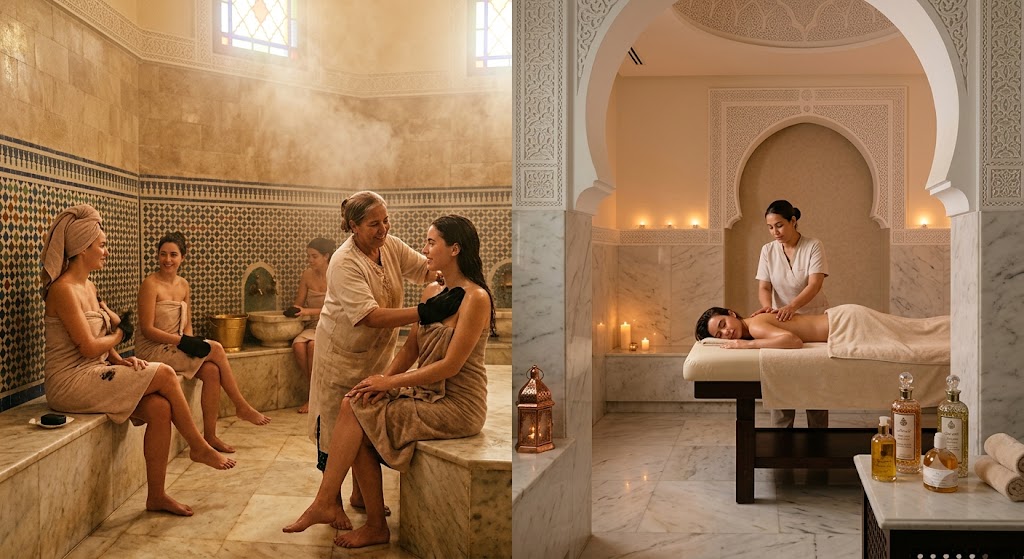
- Social Life: Join expat groups on Facebook or Meetup for events. Cafes and hammams are social hubs.
- Work & Business: Digital nomads thrive in Marrakech; teaching English or tech jobs are common.
Challenges and Adjustment Tips for Expats
Bureaucracy can be slow, and cultural adjustments like Ramadan fasting hours require patience. Join expat forums like InterNations for support.
FAQs About Living in Morocco as an Expat
How much does it cost to live in Morocco as an expat?
Around 10,000-20,000 MAD monthly, depending on lifestyle and city.
What is the best city in Morocco for expats?
Casablanca for business, Marrakech for culture, Tangier for coastal living.
Do expats need to learn Arabic in Morocco?
Not essential, but basic phrases help daily interactions.
Is Morocco good for remote work?
Yes, with reliable internet in cities and affordable co-working spaces.
What are the biggest challenges for expats in Morocco?
Bureaucracy, language barriers, and adjusting to local pace.
Living in Morocco as an expat in 2026 promises adventure and affordability. With proper preparation, you can thrive in this dynamic country. Follow Lovin Morocco for more expat guides and updates.
Top-Rated Tours & Experiences
Every city, the Sahara, transport, costs, safety, and a full Darija phrasebook — free, straight to your inbox.
Find the Best Guided Tours & Experiences
Compare 500+ Morocco tours — desert camps, city tours, food walks & day trips. Free cancellation on most.
Every city, the Sahara, transport, costs, safety, and a full Darija phrasebook — free, straight to your inbox.
Get the free guide →🌍 Wanna hear more from Morocco?
Weekly travel tips, hidden gems and new guides — straight to your inbox.
Free, no spam, unsubscribe anytime.



Leave a Reply