

What to Wear in Morocco 2026: Dress Code Guide for Tourists
⚡ Quick Answer
What to Wear in Morocco 2026
Wear loose, breathable clothing that covers knees and shoulders — especially in medinas, mosques, and rural areas. Morocco is a moderate Muslim country; revealing clothing can attract unwanted attention. Swimwear is fine at beach resorts and hotel pools. Men: linen trousers, T-shirts. Women: maxi skirts/dresses, light cardigan.
| Situation | Recommended Clothing | Avoid |
|---|---|---|
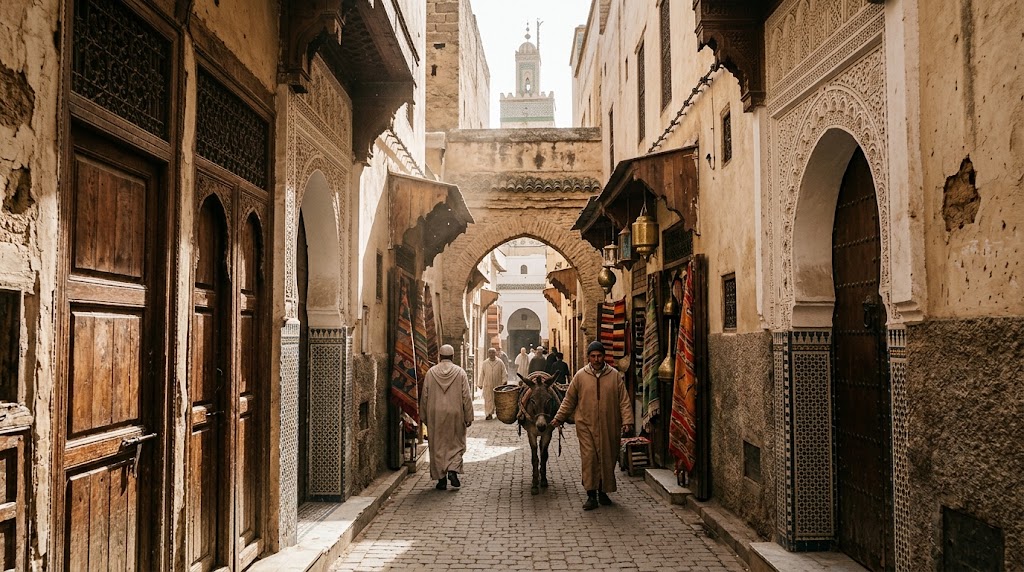
| Medina / markets | Long trousers/skirt, covered shoulders | Shorts, sleeveless tops |
| Beach / Agadir | Swimwear, shorts fine | Nothing to avoid |
| Desert (Sahara) | Light long sleeves, scarf, sun hat | Dark colours (absorb heat) |
| Mountains (winter) | Layers, warm jacket, sturdy shoes | Just T-shirts — can be 0°C |
The Golden Rule: Cover Up in Cities and Medinas
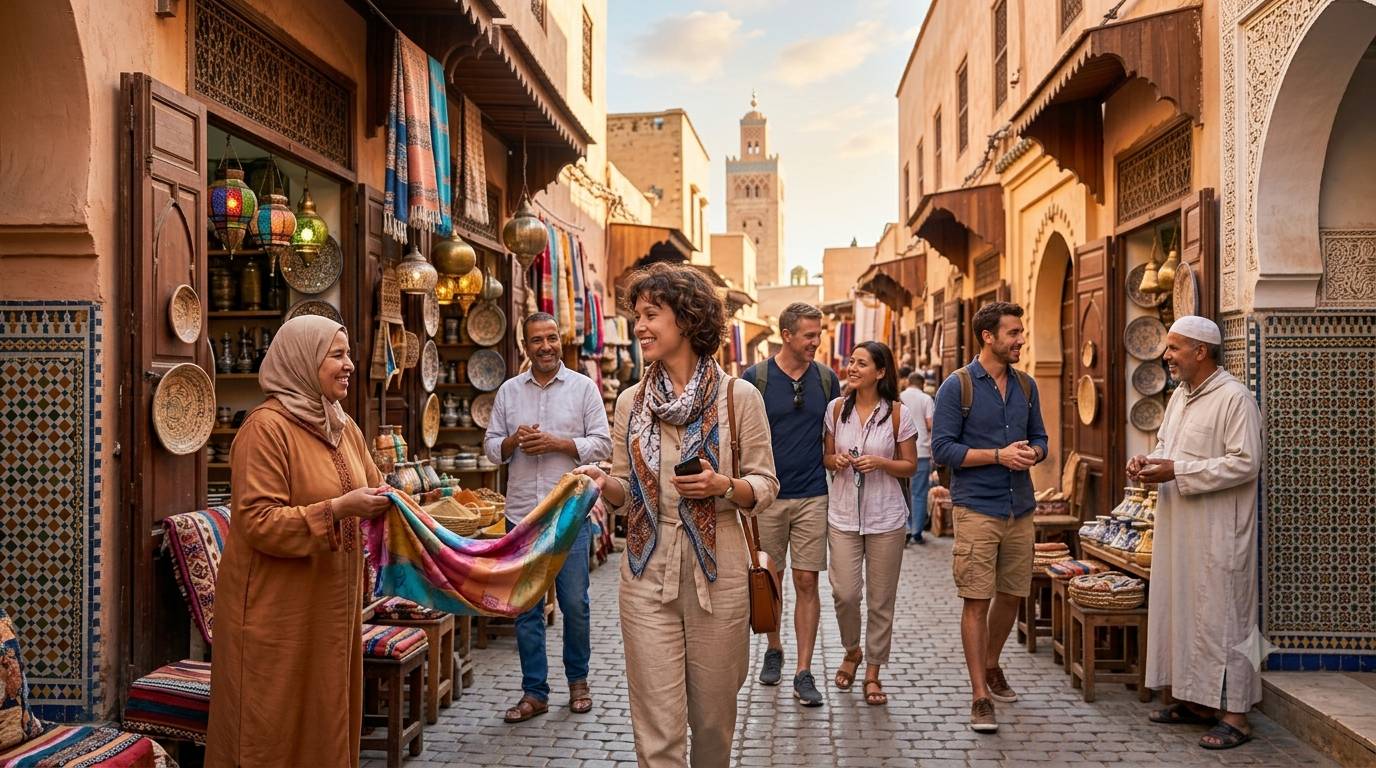
Morocco is a relatively conservative Muslim country. While tourists are not required by law to dress modestly, covering up in medinas, markets (souks), mosques, and rural areas shows respect and significantly reduces unwanted attention — particularly for women travelling solo.
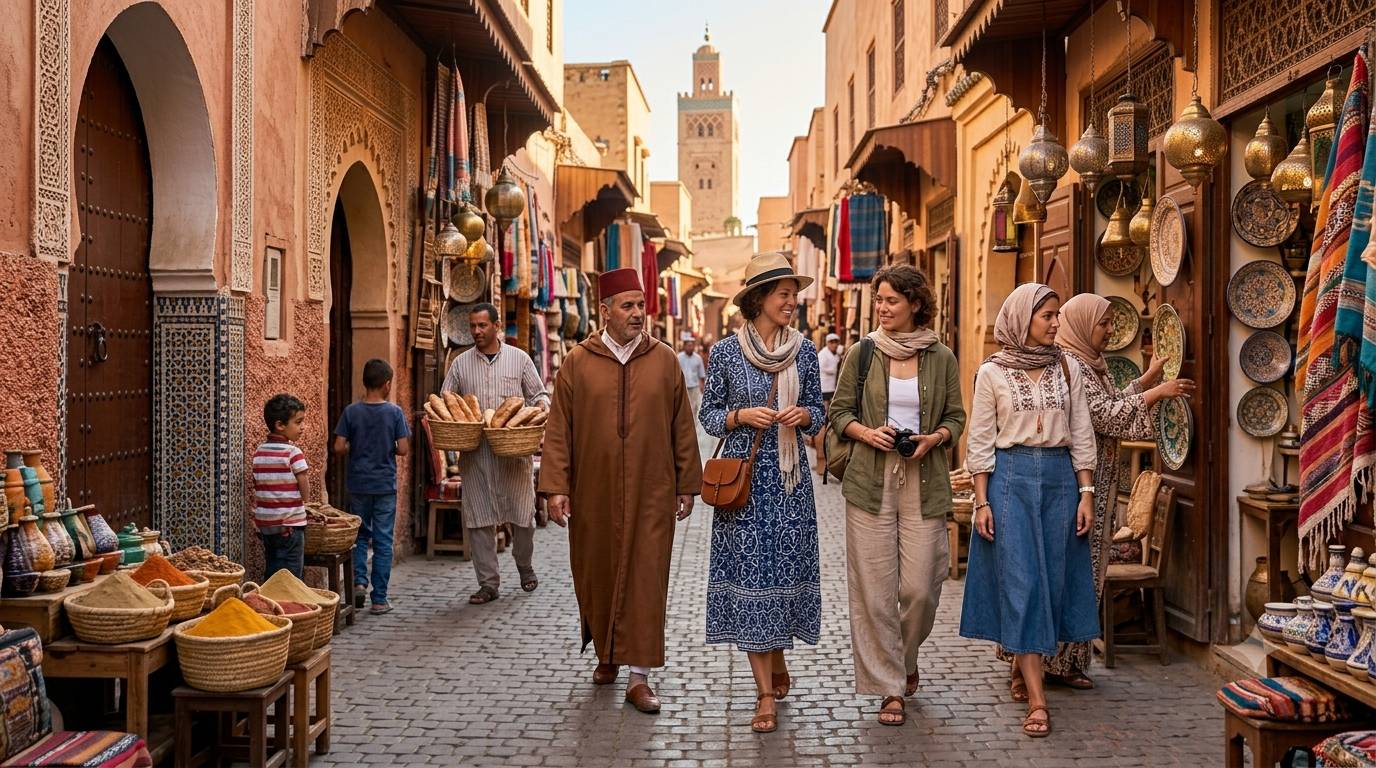
In practice, this means: knees covered, shoulders covered. A light cardigan or scarf in your bag solves most situations instantly.
What Women Should Wear in Morocco
Women have the most to consider when packing for Morocco. Here is what works best:
- Maxi skirts and dresses — cool, stylish, and completely appropriate everywhere
- Loose linen trousers — breathable and versatile for medinas and restaurants
- Light cardigan or pashmina scarf — covers shoulders instantly; doubles as sun protection and sand barrier in the desert
- Loose shirts and tunics — avoid anything too tight or low-cut in conservative areas
- Comfortable flat shoes — medina cobblestones are brutal in heels; sandals with grip work well
You do not need to wear a hijab as a non-Muslim visitor. That is a personal religious choice. However, a scarf in your bag is genuinely useful for the Sahara (sand, sun) and gives you the option to cover up at any moment.
What Men Should Wear in Morocco
Men have significantly more flexibility, but the same principles apply in conservative areas:
- Linen or cotton trousers — comfortable in summer heat and perfectly appropriate everywhere
- Polo shirts or plain T-shirts — fine in medinas; avoid graphic tees with alcohol/political themes
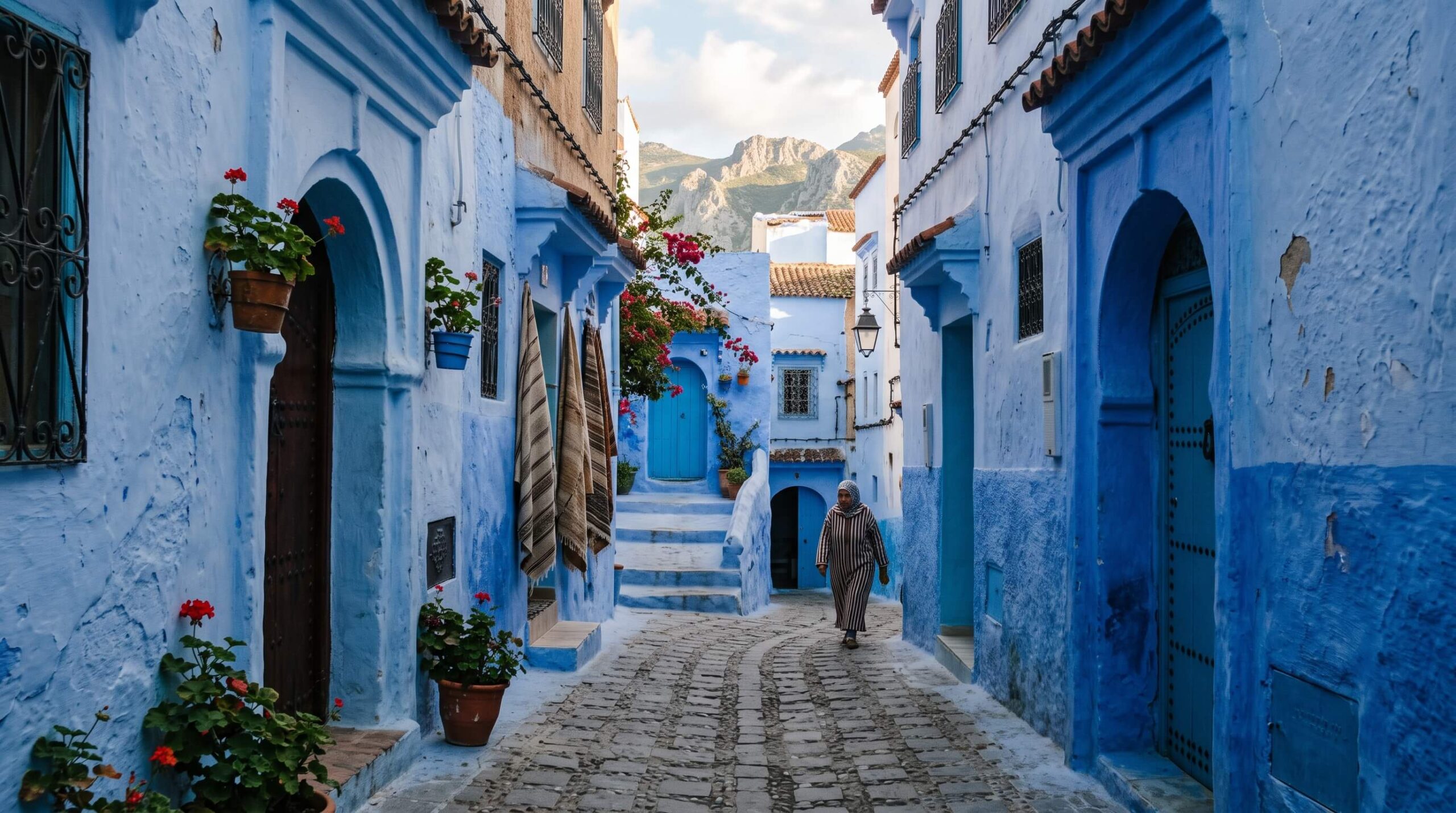
- Shorts — acceptable in beach towns and resorts; slightly conspicuous in Fes or Chefchaouen medinas (though not forbidden)
- Light jacket or hoodie — evenings in Marrakech can get cool even in summer (15–18°C nights)
Top-Rated Tours & Experiences
What to Wear by Season
Spring (March–May) — Best Time to Visit
Daytime temps 20–28°C, nights 12–16°C. Pack: light layers, one light jacket, breathable clothes. Perfect conditions — you will be comfortable in linen throughout the day.
Summer (June–August) — Very Hot Inland
Marrakech and the interior reach 38–44°C. Pack: ultra-light breathable fabrics (linen, cotton), sun hat, UV-protective shirt, cooling scarf. Avoid dark colours. Paradoxically, long loose clothing is cooler than bare skin in direct sun.
Autumn (September–November)
Similar to spring but slightly warmer in early autumn. Light clothing during the day, a light cardigan for evenings. Ideal packing conditions.
Winter (December–February) — Colder Than You Think
Coastal cities stay mild (15–20°C). Atlas Mountains can drop below 0°C. Marrakech averages 8°C at night in January. Pack: warm layer, waterproof jacket, scarves, possibly a down vest. Do not assume Morocco is always warm.
Specific Situations
Entering a Mosque
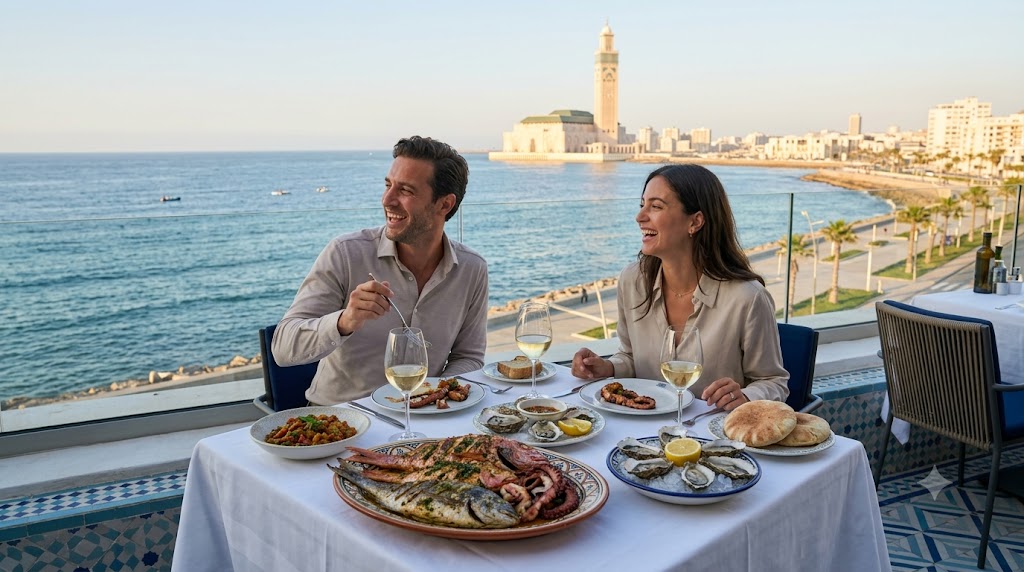
Non-Muslims cannot enter most Moroccan mosques. Exceptions include Casablanca’s Hassan II Mosque — the only major mosque open to non-Muslims. If you enter: shoes off, shoulders covered, loose clothing. Women: head covering required inside.
Sahara Desert Trip
Light long-sleeved shirt or UV tunic is essential — you will be in direct sun for hours. A keffiyeh-style scarf wraps around the face when sand blows. Sunglasses (wraparound for sandstorms), sturdy sandals or closed shoes for dune hiking.
Hammam
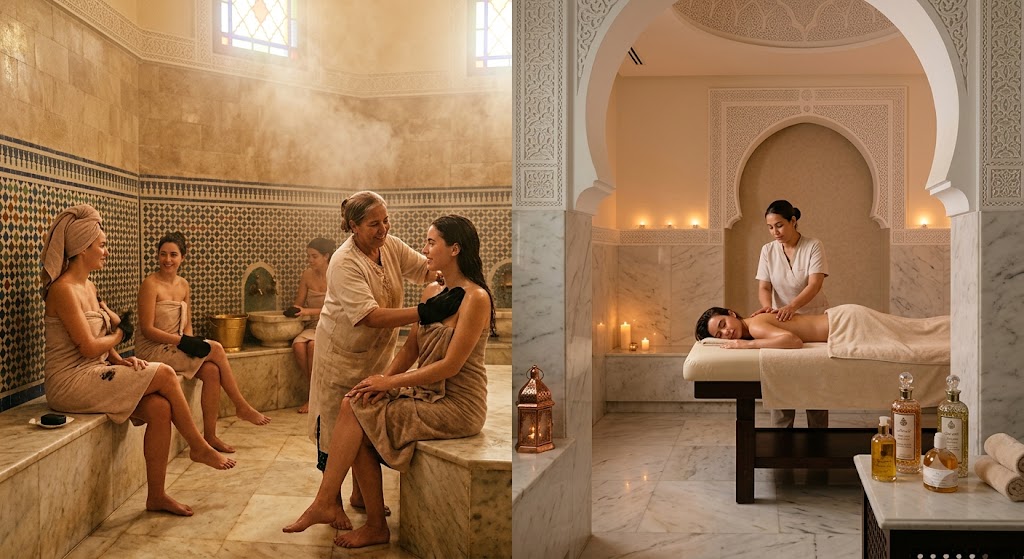
Traditional hammams provide a sarong (kess). Some tourist hammams let you wear swimwear. Bring flip-flops. Leave jewellery at your riad.
Riads and Restaurants
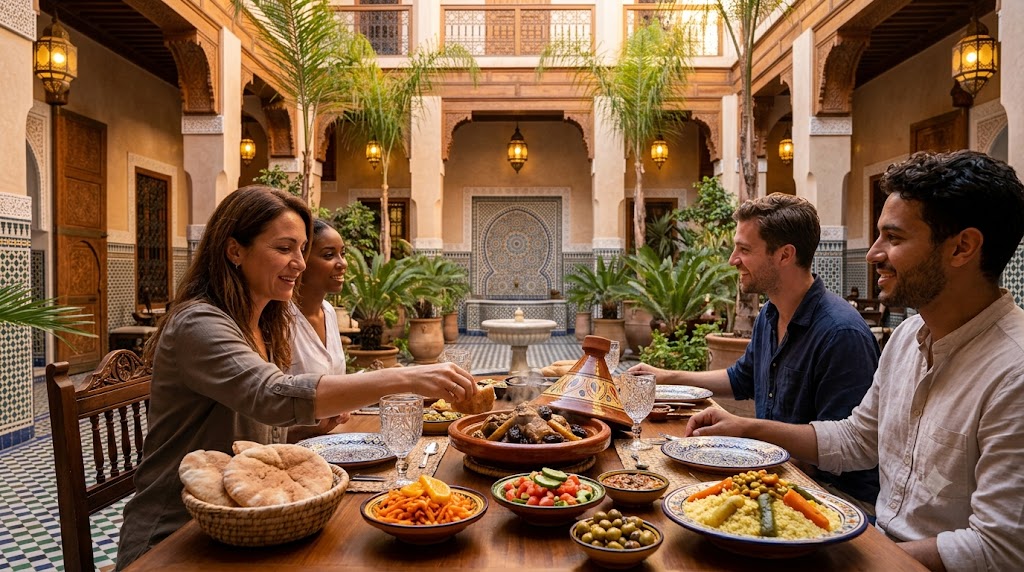
Riad dinners tend to be casual. Smart casual is appreciated at upmarket restaurants. No strict dress code, but modesty is always respected.
Morocco Packing List — Clothing Essentials
- ✅ 2–3 loose linen trousers or maxi skirts/dresses
- ✅ 3–4 breathable tops (light colours)
- ✅ 1 light cardigan or long-sleeve shirt
- ✅ 1 scarf/pashmina (desert + modesty cover)
- ✅ Sun hat or cap
- ✅ Comfortable walking shoes (medina cobblestones)
- ✅ Sandals with grip (beaches, riad courtyards)
- ✅ Sunglasses
- ✅ 1 warm layer if visiting October–March
Every city, the Sahara, transport, costs, safety, and a full Darija phrasebook — free, straight to your inbox.
Get the free guide →What NOT to Wear in Morocco
- ❌ Very short shorts or micro-miniskirts in medinas
- ❌ Crop tops or bikini tops on streets (only for beaches/pools)
- ❌ Politically controversial clothing
- ❌ Tight-fitting clothing in rural areas or religious sites
Morocco is one of the most welcoming countries in North Africa for tourists. Dressing modestly is simply about respect — not restriction. With the right packing, you will be comfortable, respectful, and well-received everywhere from the Sahara to the Atlantic coast.
🎟️ Top-Rated Morocco Tours & Experiences:
Find the Best Guided Tours & Experiences
Compare 500+ Morocco tours — desert camps, city tours, food walks & day trips. Free cancellation on most.
Every city, the Sahara, transport, costs, safety, and a full Darija phrasebook — free, straight to your inbox.
Get the free guide →🌍 Wanna hear more from Morocco?
Weekly travel tips, hidden gems and new guides — straight to your inbox.
Free, no spam, unsubscribe anytime.