

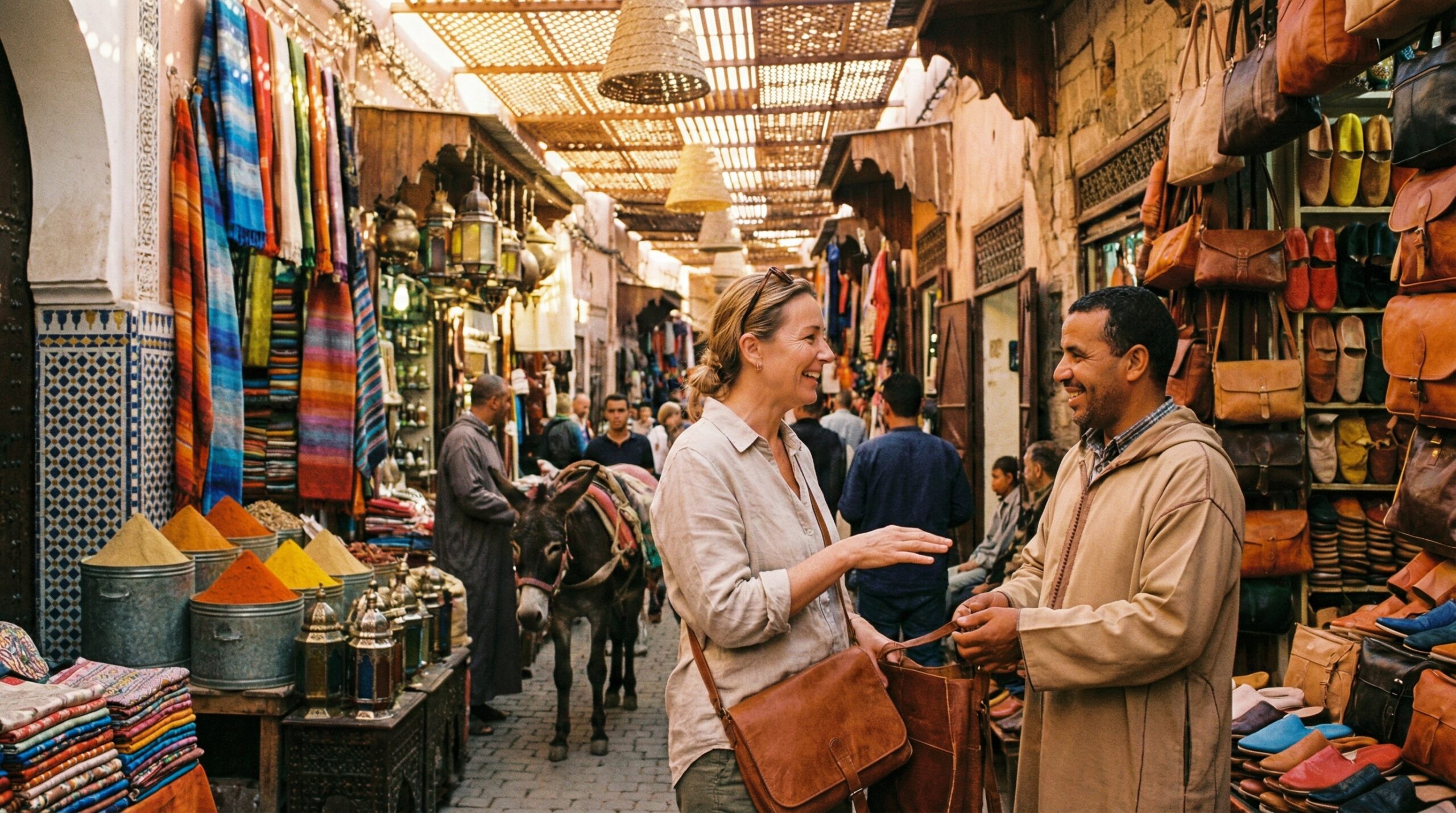
How to Bargain in Moroccan Souks: Tips That Actually Work
Bargaining in Moroccan souks is a cultural ritual that first-time visitors often find intimidating but rewarding once understood.
Table of Contents
In 2026, souks in cities like Marrakech, Fes, and Chefchaouen remain vibrant marketplaces where haggling is expected for most items, from leather goods and spices to ceramics and textiles. Unlike fixed-price stores, the initial asking price is rarely the final one, and skilled bargaining can reduce costs by 30–70%. This guide provides practical, respectful strategies based on real traveler experiences and local market dynamics, helping tourists secure fair prices while enjoying the process.
Understanding the Souk Bargaining Culture
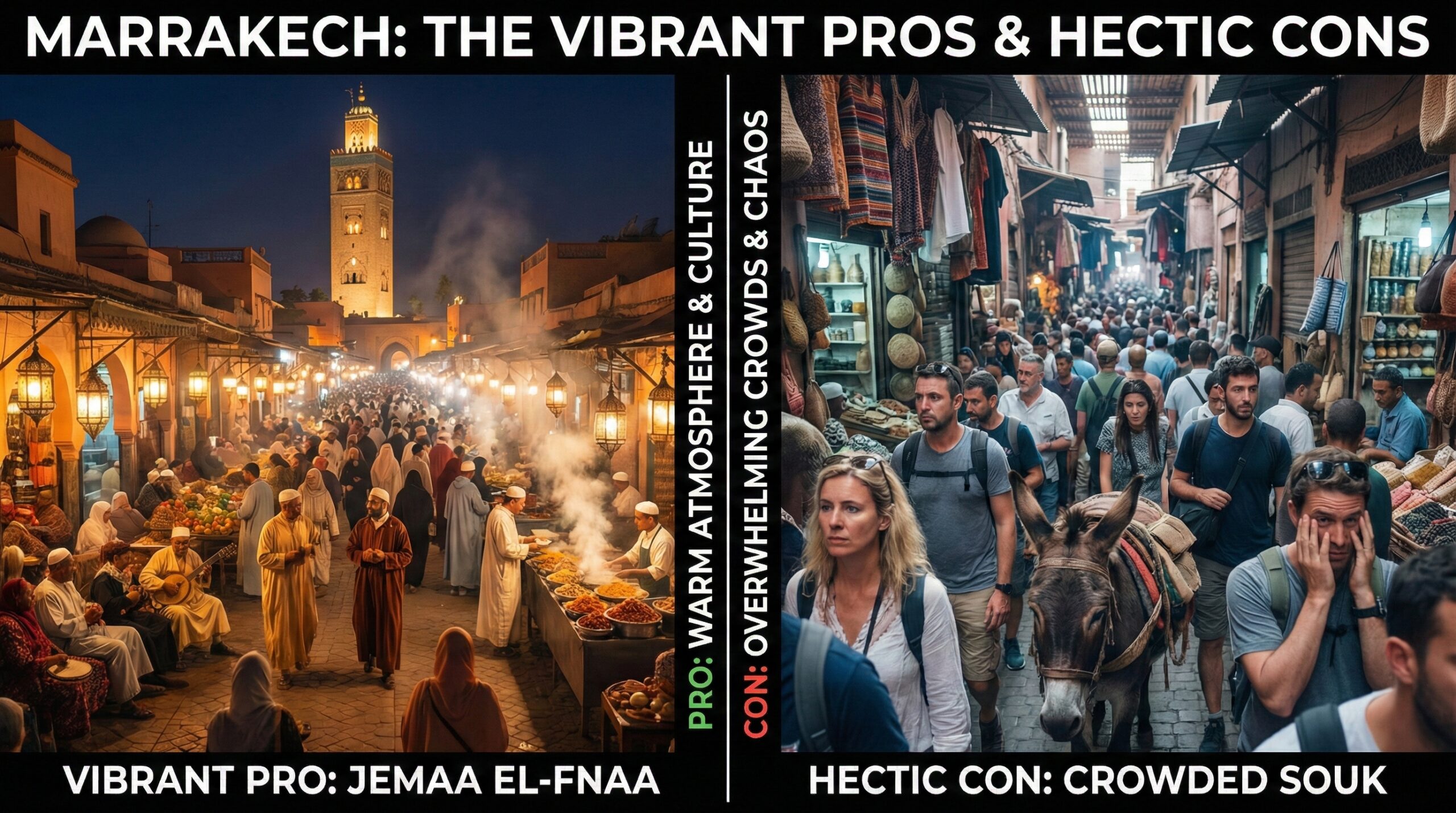
Moroccan souks operate on a relationship-based pricing model rather than fixed retail. Sellers view bargaining as a social interaction, not confrontation. The starting price is often inflated to allow negotiation room, reflecting the seller’s skill and the buyer’s perceived wealth or interest. Respectful haggling is appreciated; aggressive or rude behavior can end the conversation. In 2026, English-speaking vendors are common in tourist areas, but basic Arabic or French phrases build rapport.
Step-by-Step Bargaining Process
- Show Interest Without Commitment Browse calmly, ask questions about craftsmanship, and express admiration without saying “I want to buy.” This lowers the initial price.
- Ask for the Price When ready, ask “Bshhal?” (How much?). Expect 2–3× the fair value.
- Make a Counter-Offer Start at 30–50% of the quoted price. For example, if a bag is 800 MAD, offer 300–400 MAD. Smile and be polite.
- Negotiate Gradually Increase your offer slowly (e.g., 50 MAD increments). Walk away if the price doesn’t drop—this often prompts a better deal.
- Close the Deal Once close, shake hands to seal the agreement. Paying cash is preferred; cards may incur fees.
Best Souks and Items to Bargain For
- Marrakech Souks (Semmarine, Souk des Teinturiers): Leather slippers, argan oil, spices. Start 50–60% lower.
- Fes Tannery Area: Leather bags, jackets. High-quality items allow 40–50% discounts.
- Chefchaouen Souks: Wool blankets, blue pottery. Smaller markets mean less aggressive haggling.
Common Mistakes to Avoid
- Never insult the seller or product.
- Don’t show too much excitement—sellers raise prices.
- Avoid bargaining in small shops or for low-value items (under 50 MAD).
- Don’t walk away rudely if you’re not interested.
Practical Tips for Tourists in 2026
- Carry small bills (20, 50, 100 MAD) for ease.
- Shop in the morning when sellers are eager.
- Learn basic phrases: “La shukran” (No thank you), “Ghali bzzaf” (Too expensive).
- Use cash apps like PayPal for larger purchases if accepted.
- Consider guided shopping tours (300–600 MAD) for first-timers.
FAQs
Is bargaining expected in all Moroccan souks?
Yes, for most handmade or non-fixed-price items.
How much can you save by bargaining?
Typically 30–70%, depending on item and skill.
What if I don’t want to bargain?
Pay the asking price or shop at fixed-price stores.
Are souks safe for tourists?
Yes, but stay aware of pickpockets in crowds.
Bargaining in Moroccan souks is a cultural highlight when done respectfully. Practice patience and enjoy the interaction. Follow Lovin Morocco for more market tips.


Leave a Reply